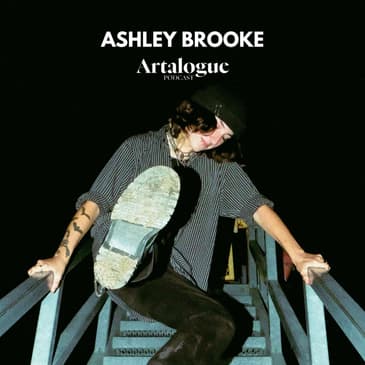
Ashley Brooke (b.2003), A.K.A SpookyRatt, is an emerging mixed media artist based in Fort Worth, Texas, whose goal is to connect others through their work, whether it’s through a photo or splattered on a canvas. Spookyratt is known for their chaotic/abstract work, their spine chilling monsters and their stimulating grungy photographs, which leave viewers feeling a mix of uncanny emotions that they can't quite describe. In episode 9, we discuss authenticity, believing in yourself and creating work that stands for itself. As a young artist, Brooke is beginning to navigate an art world that has changed rapidly within their own lifetime. In addition to creating works of art, the artist creates stop motion videos showcasing a grungy and surreal process.
SpookyRatt's website
SpookyRatt's Instagram
Connect with the Artalogue:
Madison Beale, Host
Be a guest on The Artalogue Podcast
Spooky Rat, also known as Ashley Brooke, is an emerging young mixed media artist based in Fort Worth, Texas, whose goal is to connect others through their work by expressing and capturing emotions, whether it's through a photo or splattered on a canvas. Spooky Rat is also known for their abstract work, their spine-chilling monsters and their stimulating, grungy photography, which leaves viewers feeling a mix of uncanny emotions they can't quite describe. Ashley, welcome to the show. Thank you for having me. How did you get the pseudonym Spooky Rat?
Speaker 2:I was making a TikTok account and I needed a name that people couldn't find me because I was in high school at the time. So I just wanted to make an art account where I just post my sketches. And then when I made my name, I was thinking about rats, because I really like rats and I had a pet rat named Boo and my birthday is October, so I've always been Spooky. So I just put the two together and then I kept it because it helped me create an art personality and it helped people remember my name a little bit easier, like your persona. Yeah, it helps me be not myself, because myself I'm like really introvert, and having the name really helps me do things that I'm not usually comfortable with. Can you tell me a bit more about your paintings?
Speaker 2:I typically do mixed media art. I use a lot of textures and layers. I like to create a visual feeling to viewers. I typically use darker shades of colors. I would say it's like a little bit of a chaotic when you look at it, but I don't know, I feel when you look at it it can be a little peaceful to some people. Each piece pretty much expresses some sort of story or feeling. I like creating little stories or emotions that people can connect to. I like when things can connect with people.
Speaker 1:I think your paintings especially are very evocative and they are in a sense secretive. They are stories for you that are personal to you, but then when the viewer looks at it, they see something maybe entirely different. Have you had anyone express something out of the field that they've appreciated in your work?
Speaker 2:No, yeah, I've had some people because some of my work I do cartoons or more of a Tony looking figures and I've got a lot of Simpsons. It looks like the Simpsons. Or I recently did a painting and it was. I took my paintings and paintbrush and I just made I don't know how you would describe it, but I just took it and made a consistent line and filled it in and then somebody compared it to a SpongeBob painting. I thought that was really interesting to see.
Speaker 1:That's awesome. I love that kind of common culture that's coming into your work. Whether it's the Simpsons or someone thinking it's SpongeBob, there's that level of connection, I think, for younger people in your work that really speaks to them.
Speaker 2:I actually had someone DM me and be like this was in my nightmare, your creature was in my nightmare and I was kind of confused. But I asked if it was good or bad and they said it was not bad. So I'm not sure what happened in the dream, but that kind of gives you a sense of what my characters look like.
Speaker 1:Yeah, nightmarish, but also uncanny in a way that you've seen them before. But sometimes they can be threatening or non-threatening.
Speaker 2:That's so interesting.
Speaker 1:What are some of your earliest memories of art?
Speaker 2:My earliest memories and art when I was in elementary school. I was always known as the artistic kid, so people would come up to me for drawings and be like, can you draw this for me? So I was always known for being that kid and I always gave my teachers little paintings or little drawings I made. And oh yeah, in second grade I was cleaning out my room last week because I made a studio in my house and I came upon this old poster I made in second grade and the About Me posters. I'm not sure if you made that in elementary, but I read that my wanted to it's what do you want to be when you grow up? And I put I want to be an artist, which I never really remembered as a kid. I just knew I liked drawing. But seeing that and then seeing where I am now on the road of that was really shocking to me.
Speaker 2:I used to draw with my grandpa as well. He used to work for the store named Outwardsons. It used to it's a little market like a Kroger. I don't know what. You're from, canada, right?
Speaker 1:Yeah, like a Safeway, yeah, or a Tesco for our English listeners. Wait, you guys don't have Kroger, no.
Speaker 2:Yeah, it's like a little market and he used to do the little posters for food sales and he would always do little cartoons and he would take me in to work with him sometimes because he would babysit me a lot and he would just teach me painting and just all these really cool techniques and that's also a little background of for me being an art kid.
Speaker 1:That's such a sweet story. I can just imagine you looking up to your grandpa and also how fun those drawings must have been for people going into the stores and just seeing that extra care that someone took to brighten their day.
Speaker 2:No, it was always fun, because when I would go to Albert Serns with my mom, I would always be like oh, my grandpa made that, that's awesome.
Speaker 1:So, as well as your granddad, who are some of your artistic inspirations, David Chil I love David Chil.
Speaker 2:He was the guy who really got me into expressionism, like being more, doing more with my body, with my art, like putting my hands in the paint and like putting it on the canvas. George Basilitz I love him. I loved him. Burton and Gustavo my cartoons. I get a lot of inspiration from Robert Crum, which is a cartoonist, like a comic guy, and then I really love Philip Gustavo. He's a cool guy.
Speaker 1:Yeah, his work's awesome. I saw it when I was in London this past November. He had a show on at the Tate Modern. It was amazing.
Speaker 2:There was an exhibition of his in Austin last year.
Speaker 1:As a self-taught artist, how do you develop your style?
Speaker 2:I would find people I looked up to and I would practice just drawing or like kind of copying, which some people think you shouldn't do. But I think when you're trying to find your style, I think copying, and then no, don't post it. That's the thing, don't post what you're practicing, but I would copy and then I would start learning different techniques from learning how to draw what they did, and then over time you just combined it all and you just create your whole new thing.
Speaker 1:I have a quote here. Let me find it Just because I'm reading a book about this the artist Maurizio Catalan, who is famous for sticking, I mean, among other things. But I think most people know Maurizio from when he did his comedian sculpture at Art Basel, where he stuck a banana up against a wall and duct taped it. But so in this book called 33 Artisan Three Acts by Sarah Thornton, she interviews Maurizio Catalan and he says originality doesn't exist by itself. It's an evolution of what is produced. It's like the Darwinian evolution of walking. Nobody did it first. Originality is about your capacity to add. I just think that really encapsulates what you've been saying.
Speaker 2:That's like perfect. Yeah, I don't know why, but people say that you shouldn't copy, and I agree you shouldn't put it as your own work. But I don't know. I've always felt like people are against people taking stuff.
Speaker 1:Yeah, I think there's a balance to it, right, I think there's there's inspiration and then there's outright copying and being derivative. But I think as well Catalan says that great artists steal and don't cite their sources. I'm paraphrasing there, but everyone's borrowing from each other. What's your process in creating art?
Speaker 2:Usually I listen to music and I try to feel my emotions, to see if I'm like angry, sad or anything I want to express. I start to sketch around a lot and just get my brain flowing, and then, if that isn't working, I'll put on like cartoons in the background, usually from like adult swim I don't know if you watch stuff, but call like crazy cartoons, which can really get like your brain going. When I start painting, though, I like to create a story in my head that I want to like portray, and then I'll get into it without knowing where I'll end up, because I feel, every time I try to go in with a vision, it makes me more mad, because I feel like it'll never be how I want it to be. So going in with an empty head on what you want it to look like really helps me make something that I think looks good, and I like to let the brush do the paintwork a little bit. Just go with the flow with it, let it do its own marks.
Speaker 2:I like to put on loud music and I like to visualize. I'm channeling the music in my emotions and just not in my head. I've had people in my room when I painted and they said I enter a whole new world. That is, I mean, which is really weird, but I don't know. It's interesting to see.
Speaker 1:How are you finding being a young artist right now?
Speaker 2:It's fun. I've realized from doing a couple of shows it's a little bit harder, because I just turned 20. And I had my first show when I was like 18 or 19. And I went to New York and everybody was way older, like maybe in their 20s, the 30s, and I had a really hard time like nobody really came up to me to talk to me and, being so young, I'm so introverted but it was hard for me to talk to people. Overall, I really liked it. I think it's a journey and it teaches you a lot about growth, on how to be more confident in your work. I'm learning to talk to older people for sure.
Speaker 1:Yeah, I think that's one of the hardest parts about being an artist not necessarily making the work, but networking.
Speaker 2:No yeah, for sure, and the galleries are usually run by older people. You really have to know how to talk to them because they're all very like they love to talk. How do you share your work? Yeah, I mainly do online. I like post my work everywhere. On every social media platform I have, I reach out to people and recently I've been connecting in person. I'm going to gallery openings and artist talks and trying to meet people through there, but mainly a lot of it's through social media.
Speaker 1:So, for a context, ashley makes stop motion videos of their process, and I'm curious as to why you choose this route for documentation as opposed to filming in real time.
Speaker 2:I enjoy making it. I've always had the love for animation. I took a class in high school for it and that's actually why I'm where I'm at is because my animation class I had a teacher named Mr Make Me Learn and I used to do doodles in his class and he was standing over my shoulder and he was like Ashley, these are really good and I was shocked because I wasn't sharing my work at that time. It because I think I was good at art, because I just put that behind me even though I loved it. But he pushed me. He taught me animation and stop motion, adobe animate and I stuck with that. But then I realized you can do the same thing by watching Tim Burton to those really inspired me and then making the videos, I realized that it puts a visualization in my own perspective for people, because it's very fast paced and dissociated and I don't know what's happening, but you're still there. I guess it catches people's attention.
Speaker 1:Speaking of catching people's attention, what's it been like to have thousands of people see your work?
Speaker 2:It's been fun. I go to a lot of shows around me, like punk shows or techno shows, and whenever I go to new parties I actually get recognized. Sometimes I don't know, but I get recognized and people come up to me. I guess it's the beanie, because I always wear my beanie and it became my personality. But people come up to me and they're like are you spooky rat, do you make art? And I'm like, yeah, I make art and that's interesting. It also pushes me a lot getting recognized by people, because you get a lot of hate as well. So it challenges me more to push myself and do new things. It helps me connect with people as well, which has been probably the best thing about it, I don't know, having a large following. People see you more. And it's also weird because people get my stuff tattooed on me. Whoa, yeah, I've had DMs of people send me pictures of my work tattooed and people asking me like, hey, can I get this tattooed? I'm like, yeah, I go for it.
Speaker 1:Wow, that's insane.
Speaker 2:That's so cool. The downsides of it is more scams, like. You get more DMs and people trying to buy your art and people steal your art, which is annoying. I'll people that follow me literally redraw my art and then post it on their Instagram and again more hate, but that's normal.
Speaker 1:How do you navigate those situations?
Speaker 2:The people stealing my art. Yeah, like how do you?
Speaker 1:what do you do in that situation, if someone steals your art?
Speaker 2:I haven't had any like big steals. It's usually not that good, so I just report it. I don't I should do more, but if it's like getting more attention, I'll probably like have to talk to them and like get stuff Darn.
Speaker 1:For your characters in your work. Are they standalone figures or is there recurring characters with recurring narratives?
Speaker 2:Some of them are reoccurring and some of them are usually their own little thing. But I think you can. If you see a lot of my work, you can see the main ones and the new ones which I don't know how to describe, but I feel like you can just tell a difference with each one. You name them. I don't have a name for them. I really should. I just call them monsters, creatures.
Speaker 1:How have you built your platform as an artist?
Speaker 2:So at the beginning I sold at local markets and that kind of helped me get comfortable and see what people go for more when buying stuff for me. I post my art everywhere. I network with others online so I'll reach out to people and it's crazy how many people actually respond to people you look up to. I go to artist talks and opening nights with galleries and meet people and kind of get a feel of like what they do. And another thing I do is I leave my little artist cards, like with the QR code, on to my link tree and I just leave it everywhere. For example, when I went to New York I brought a handful and I just left them on benches and tables and I don't know who saw them. But I just do that. I meet a lot of people through that. I also leave posters around. I'll print the picture of my art and then I'll put a QR code and I'll just put them on polls and stuff.
Speaker 1:What's it like to have your work in a group show? What was that process like, going to New York and having it on display?
Speaker 2:I got to meet a lot of great people and artists. It's fun to talk about your art a little more, because I struggle with it a lot. I learn more about how things are done, like new ways of doing things. Recently I've been building relationships in the art world and meeting local collectors, like you would say, and they've reached out to me to just have a little group show Amazing. Oh yeah, I had a show in New York with Maven Art House and Keenan Thompson from SNL. I know him from Good Burgers, the old Nickelodeon show. He took a picture of my art and I didn't realize who it was at first because I wasn't at the show. I wasn't able to make it. But I looked at who was tagged and I was like that's Keenan Thompson. That's crazy.
Speaker 1:That is crazy. How do you see your art developing in the future?
Speaker 2:I definitely want to work on a larger scale, like bigger canvases. I want to try to do a mural. I want to try to do that. I want to get more three-dimensional art and sculptures. I've been like reeling into that. I know they can't see it, but today I made a stop-motion video and I made this little two-headed bear for my stop-motion video. That was really fun. I'm trying to work with more clay and plaster. I want to experiment with more textures for sure, because I love textures. I made a piece recently with crackle paste and that was really fun to work with. I want to work with more clothes, drawing on clothes and experimenting with textures.
Speaker 1:What advice would you have for people looking to become artists?
Speaker 2:I would say be consistent, be confident in your work, put yourself out there. Stop caring about what you think about your work and what other people think about your work. I feel like you can really get in your head and put yourself down. If you're just consistent with it and you stop caring, I think you can go further than what you think you can go.
Speaker 1:Amazing. Ashley, thank you so much for being on the show today. It's been so fun to talk to you. Thank you for having me. I had fun.