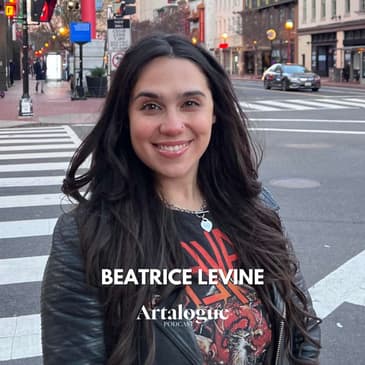
Join us on a fascinating journey into the world of art history and pop culture with our esteemed guest, Beatrice Levine. A renowned art historian and the creative genius behind the popular Instagram and TikTok account, Culture Quota, Beatrice provides an enthralling glimpse into her unique academic journey. From her initial love for art history sparked by a trip to Rome, to her groundbreaking undergraduate thesis on the interconnection of memes and art, and her profound current research on Nazi-era art looting, she unfolds a tale that is as inspiring as it is illuminating.
Ever wondered about the impact of social media on art? As we journey further, we examine this intriguing subject, discussing how platforms like Instagram and Tumblr have demolished barriers to the art world. With Beatrice, we explore the role of these platforms in democratizing art, sparking discussions that were once confined to stuffy academia, and their potential pitfalls, including the risk of echo chambers. This segment promises to leave you with a new understanding of how social media has revolutionized the art world.
Lastly, we venture into the captivating realm of contemporary art. Sharing our own experiences, we highlight the need for a novel approach to understand and appreciate this art form. And for some light-hearted fun, we reimagine the Vanderpump Rules cast as famous artists. We also share our candid thoughts on a controversial cast member's questionable music career. Tune in for this engaging exploration of the complexities of contemporary art and the role of context in its appreciation. It promises to be as entertaining as it is enlightening!
Connect with the Artalogue:
Madison Beale, Host
Be a guest on The Artalogue Podcast
Hi everyone. Welcome to the Artalog with me, Madison Beale, and today on the podcast we have Beatrice Levine. Beatrice is an art historian and content creator on TikTok and Instagram. In 2015, while studying abroad in Rome, she met her best friend and now business partner, Alison Woods. Together, they combined Beatrice's love for art history and Alison's love for social media to create Culture Quota, a one-stop shop on Instagram and TikTok that celebrates the intersection of art and pop culture. Beatrice has her BA in art history from Loyola University, Chicago, and is currently completing her master's degree in art history and working as a graduate teaching assistant at the University of Kansas. Her current research focuses on Nazi-era art looting and problems research. Beatrice, thank you for being on the podcast. Thanks for having me. I'm so excited to be here. I'm excited to have you here. I've been following Culture Quota for so long and I'm a big fan of the Instagram, so I'm always shocked when people say that I forget how long I've been doing it.
Beatrice Levine:I think it's since 2016. Oh my gosh, that goes back Wow. Yes, I was an undergraduate when I started it, so it's weird to even think that people have been following it since then, probably Wow.
Madison Beale:Yeah, that's insane. It's just such an amazing Instagram. So how did you get into art history?
Beatrice Levine:You know it's funny, I did it in high school, which is not typical. Most stateside high schools don't offer it, or if they do offer it, it's as an AP course, and that is even few and far between in US public school and I was going to a Department of Defense high school overseas in Germany and so there was a very sort of healthy option, or selection I should say, of like a various placement courses, because as military kids we didn't have to pay for the testing. So a lot of times in the States that's why students maybe aren't as incentivized to take it AP course, because at the end of the course you do take a very difficult test and you are then of course paying money to take that test. So it's already inaccessible. And luckily for me I didn't have any of those barriers. So I really I took AP art history because I had to have a fine arts credit to graduate high school and I'm self-aware enough to know that if I had to take ceramics or pottery or painting or drawing I'd actually do worse than in a traditional sit down writing essay course. So I took it and I applied to university.
Beatrice Levine:It was my senior year of high school, a bunch of universities, thinking I was going to be a journalism major or an English major, and then just kind of figure it out and I fell in love with our history and I think part of it wasn't a grown up overseas, mostly in Germany and England, and then, of course, traveled around France and Italy because, as you know, when you're over there it's a lot, it sounds fancier than it is right, like, oh, we went to France and Italy but you don't realize it's maybe 20, especially back then 30 year old, trying to take it right, it's nothing crazy. So we would go on these trips as family, as a family. And then when I was taking the course, I was like, oh, I've actually seen almost all of these things we're talking about, because you learn the very basic canon of our history and then to then be able to travel at that age and go out and see these things specifically that we were learning about, learning about Bernini and then going to Via Bergeza, being able to go to Rome and visit on the weekend, was really life changing for me and I took the AP test. It was like three hours in a non air conditioned, sweaty auditorium in our high school on base, from where the windows were open. It was June or May and when I was done, my best friend at the time was sitting outside.
Beatrice Levine:It was so high school I'm pretty sure he was on a roof of like a building, like why was he even up there, like can not have been more high school? And he said you know how'd your test go? And he said, honestly, I could have done that for like three more hours. And he said, well, maybe that's what you should do. So I, literally, when I started at the University of Kansas that's where I started my undergraduate career I the first day on orientation said, nope, I'm actually not an English major anymore, I'm an art history major, and that was in 2012. And I've never changed it, which, again, is also very unusual in the States, very unusual. Most people claim one thing and they're like pre-med their freshman year and then they're in PR right by the end of their time and that's a real housewives of New York reference for any roti fans. Oh yeah, that's really how I got into it. Like, it's like an academic discipline.
Madison Beale:Yeah, so can you tell me more about your undergrad thesis and how that grew into culture?
Beatrice Levine:quota. Oh my gosh, that's so funny. It's almost like embarrassing to talk about and how to be like. I basically had a project in undergrad where I basically wrote about memes and made it my whole focus or my research. So when I started at Loyola, I had to take their introduction art history class, even though I had already taken that course before. But to graduate there and get a Loyola degree in art history, you had to take their version of intro to art history and it was called Art History 199 or something, and Robin Maracle, who taught that class it was just and I love her. She's an amazing art historian and was a fantastic professor. She had us do a big term project and it was to curate our own hypothetical exhibition, Thank you.
Beatrice Levine:And so at the time this must have been probably 2016 and Instagram was really big. You know, Twitter was really annotated and memes were such a thing and art history memes really had their own, like renaissance in this time, and so I decided I was going to make a faux exhibition about the intersection of art history and pop culture, visual culture on the internet, memes and music videos. Really. Another thing that was like wow, I can't believe this exists was like BCS's Blood Sweat Tears had just been released that fall as well and that has so many art history references. And so the idea was you would either get the actual artworks from those music videos or from those pieces of culture and have them in the space with the internet culture piece or you would project it. If you couldn't get it like right, you know Michelangelo's, like PA Taa, you're never going to get that for an exhibition, so you would project it, so add that sort of synthetic visual element to it. And I enjoyed that project so much.
Beatrice Levine:It was a group project, I think, and I really just steamrolled out of everyone and I'm sure they were somewhat grateful because the project was done, but I couldn't stop working on it. So I said to my professor, to Robin, I think I might propose this as my senior thesis research topic next year. I think this is what I want to do, my senior thesis on. And she just kind of looked at me and was like okay, like I'm not in like a condescending way, just more like good luck proposing that and getting it approved. But because I think I was so passionate about it when I did propose it eventually a year later my thesis advisors were super open to it and really saw that there was something there and it was significant. So I was really lucky and in the background at the time, Allison and I were kind of trying to figure out.
Beatrice Levine:You know, Ally's my business girl and she was trying to figure out, you know, like, how do we monetize this? Like there's, there's something here and I'm just thinking about money sends me into a cold sweat. Yeah, I don't want to think about monetizing anything. I don't even know how my banking account works, and so she just started with. You know why don't we just establish some kind of presence online?
Beatrice Levine:And that's where culture quota came from the Instagram and the idea originally and I think, if you scroll down far enough, these posts are probably still up, because sometimes I see people reference them in comments and like wait a minute, this is so different than what this is now. The idea was you've got your quota of culture for the week, so we would post something. And at the time, what was really big? Because you didn't have multiple photos, there was no carousels, so you just had one photo and the lot of text, and so it would just be an image and what it is, why it's important and something fun you can share this weekend with your friends, right, and I guess what they would call now value based content.
Beatrice Levine:So that's really how it got started and then it just kind of evolved. I think once COVID happened, I was like I'm going to go really hard on culture quota now that I have all this time and I'm just going to post whatever I want. I'm not going to care about teaching people things which sounds terrible but I'm just going to we don't know what's to learn right now and I just started posting from it like it was my own personal account and that's really when it took off that authenticity really spoke to people more than the value based content, If that makes sense.
Madison Beale:Yeah, the first video I think that I saw of yours was of you running away from someone who said Picasso was their favorite artist.
Beatrice Levine:Yes, that meme. Oh my God, that was a meme for so long. Oh my gosh, I love that. Yeah, so like really engaging in like that as opposed to sitting, because some people are so good like you follow SEMA on TikTok. I'm not on TikTok anymore, oh God, good for you.
Madison Beale:It's like a disease, but I rotted my brain for two years and I had enough of this.
Beatrice Levine:Yes, yes, well, there's a really good creator. She does have Instagram as well, so send it to you. Her name's SEMA and she is so good at sitting down and talking for two to three minutes straight, giving you actual value based content, and it's just informative and it's engaging and fun and witty. And I just realized that that just was not my lane. Like people did not want that from me. If I ever did make those videos, they would never reach people, and so I was like people don't want this from me, they want the funny, so I will give the funny and I prefer making this kind of content anyway. Yeah, yeah.
Madison Beale:Awesome as a content creator, then. That fuses art history and pulp culture. Why do you think bringing art history into a contemporary cultural context is important?
Beatrice Levine:I think that there's this misconception that they're separate or that they don't interact. Obviously, my undergraduate thesis and I'd probably write it very differently now, six years on. But there's a big conversation between the high and low. So high culture and low culture and broad culture have always interacted and always played off one another. Or there's a great quote, I think in a Kitch video, again a long format, value-based video that no one has watched before. I talk about Kitch, but there is a quote that if Kitch had to go head to head with fine art, kitch would win.
Beatrice Levine:I think it makes art or fine art something that is seemingly exclusive and snotty sort of actually really accessible and people realize that they can engage with this content, they like this content and it speaks to them. It's valuable in your everyday life to know how to read images, and so I think once people see those parallels, like the same strategies artists were using and sculptors were using and people have been using for a millennia, are still used today in our visual culture, that really speaks to people. To dopamine hit To be like wait. I recognize that. I know that this color is associated with this feeling or this emotion. This is what they're trying to tell me it's really a dopamine hit. You feel smart but also you realize, oh, this is actually somewhat valuable to me in my everyday, because, of course, I get that with my students all the time. Why does this matter? Why should I care about this?
Beatrice Levine:And I'm like, actually, we had a whole conversation about this this week. Friday we read an article about how Roman portraiture is basically an amalgam of signifiers trying to communicate something, even though for a long time in our history it was just kind of considered like trying to push sculpture to its limit, as like a technique and being as naturalistic as possible. And one of my students said you know, isn't it really that hot of a take? And I said, to be honest, in the 70s, this was a very hot take because they were not born with Instagram or the Kardashians or you know, we got a TV. They do not know, everything is a construction, right. So once they realize that that that's essentially what's happening in our history or visual culture, people really dive into it and love it, like Brittany Broski makes those art history videos. Yes, yes, I think she's such a good interlocutor for people, for art, history and culture and visual culture. Yeah, I think people just realized that there is something here that is significant and it's valuable to them to know this content.
Madison Beale:Yeah, so, in your opinion, how has the internet and social media changed how we look at and understand art?
Beatrice Levine:I definitely think it's made it more accessible. So obviously we talked about this a little bit. I am old. I'm 30. You are not old, thank you. I'm really feeling it this week because I'm turning 30 this week.
Beatrice Levine:But I was a Tumblr child and a lot of my first exposure to art history in a way that it spoke to me on like a personal level. I didn't even realize this was. What was happening at the time was on Tumblr, seeing photographs of Brittany's sculptures, seeing pictures of Carvaggio's paintings. I didn't know who these people were. I didn't know any of the mythology behind these images, nothing. It was purely just aesthetics, and it really spoke to me as a 16, 17, 18 year old girl on like a visceral level. I was having my first reaction to aesthetics that weren't commercially driven or driven by capitalism, and so I think what it does is it makes art and art history accessible to people and it presents it to them in a way that isn't so intimidating. You can just have that visceral reaction to it aesthetically, without knowing any of the context around it, which again can be dangerous. I'm sure you've seen that on Twitter now. It's like there's context for this image.
Beatrice Levine:I actually think with art history. It's okay to not have the context and to be like I like the story, don't just purely off the aesthetics or the visuals, and then, if you're interested, of course, look into the context, but it's not necessary. And so people kind of engage with this content without all of that, without the formal elements of it. And so I think social media does that for people. They engage with this visual content and they really either like it or they don't. And then, of course, social media is a space for people to debate these things and talk about these things, for better or worse. You know, I always tell my students you know the TikTok comments are not the most nuanced place to have these discussions sometimes but it allows them to do that. It's not me and my students locked in the ivory tower and the only way you can have these discussions is by paying, you know, $1,500, a credit hour or something right. So it also does that. It kind of democratizes it a little bit definitely more than before social media existed for sure.
Madison Beale:Yeah, absolutely, and I think as well. I mean, even though social media comments or comment sections can be cesspools, I think sometimes we also get we can get a lot of value from them. When you're sitting in a seminar, sometimes there's going to be someone who puts their hand up and says the absolute dumbest thing in the world and oh yeah. But also someone's going to say something super enlightening and I think maybe why can't that be the same of an Instagram comment section showing you know, tour of the?
Beatrice Levine:Met. Well, because, especially in a seminar or some kind of academic setting, you are going to get sort of an echo chamber right. So say, you as a class are discussing something and then your professor, doing their job, maybe plays devil's advocate or just throws in another idea and then everyone's going to zone in on that idea. But you know what? No, that's right, because they want the AI with the participation points. So that's the danger of the AI retower, and that obviously doesn't exist in an Instagram comment section or a ticcom accent section. One thing I have found with my students because my students this year are, you know, the freshmen sophomores and their very hardcore Gen Z is they've gotten better I've even seen it in the past six weeks about having those ideas challenged. They used to be very much like I've read every single thing about this one topic. So I'm the authority and you can tell me no different. And if you presented an idea to them or just said, have you ever thought about this? They would say, nope, you're wrong, I'm right and I'm getting engaged.
Madison Beale:Right and it's like oh my gosh.
Beatrice Levine:Okay, I wish I was going. Where do you guys get this confidence, like? Where? Like, what podcast are you listening to? What affirmations are we saying to ourselves in the morning? I wish I walked in a room when I was 18 like this. I'm 29 and still terrified by most rooms I walked into, right, but they've gotten better about having those ideas challenged. So I you know it's not like all hope is not lost, but I did tell them the first day of class this is not the TikTok comment section, like we're not here to attack each other. We're here to have nuanced discussion and critique. Yeah, and when presented in that way, they've been able to do it. You know they're learning and they've really been able to engage with it. So not all hope is not lost for sure.
Madison Beale:Well, on the topic of fixed mindsets, I know I hear people say that contemporary art is just terrible and that people just can't understand it Right. And I was wondering with your knowledge of art history, where do you think this sentiment could be coming from?
Beatrice Levine:You know, what's funny is, even with my background and living in Europe and engaging with art history online, I was this person I think a lot of young people can be, because it seems frivolous. Or, you know, I always get asked like okay, that banana taped to the wall? Like how is that art or are you?
Madison Beale:going to say those are charity videos. I love the comedian by Mertseo Catalan. I'm a Catalan apologist.
Beatrice Levine:Same or like. Did you see the guy I think BBC posted about it like maybe two or three months ago the guy who sold the museum, a bunch of blank canvases and I was like that's the art.
Madison Beale:Okay, no, I didn't see that.
Beatrice Levine:And people were so mad and actually, to be fair, I am not like my specialty is not contemporary art, but I did. I have studied contemporary art with David Cato Forest, who's our department chair and is a wonderful art historian on contemporary art, and he even used to say in class when we were looking at stuff maybe a color filled with work or something you know, this canvas is all one color or two colors he would say, okay, guys, we're getting in the art history bubble, right. And so he was really acknowledging that to look at these pieces and take them seriously, you do have to take yourself kind of out of an everyday reality, right. You have to take yourself out of your everyday mindset and get into this art history bubble, like this is serious artwork and I'm taking it seriously and I think people are able to do that. They just don't understand why they should do that.
Beatrice Levine:And, Paul, what's hard about contemporary art I think it stems from it is so a lot of it is so conceptual in nature, right. So what I was saying earlier about you can just react to art and aesthetics and that's fine. I think that is very true for renaissance art or, you know, baroque art or you know, sort of like the, the hit me baby one more times of our history. Right yeah, but that's what people began to think that that is art like trademark TM, and so anything that doesn't look like that must not actually be art or fine art. I think that's where the disconnect lies. And then, to understand contemporary art, a lot of times it is conceptual. So you do need to have that background information, you do need to have that context taught to you, and when you see just an image of a banana taped on a wall on the internet, you don't have that context or you're receiving it from a journalist who has a very strong opinion one way or the other about it.
Beatrice Levine:So that's where I think that happens a lot Like I. Even I didn't like it, even I didn't like abstract painting or I couldn't believe. You know, kazimera Belovich is black square was a thing. And my graduate teaching assistant when I was taking HA 150 at KU, just like my students are, now said to me be it, just if you love the Renaissance, you love Baroque, you have to understand how that leads in but becomes Kazimera Belovich is black square. And I said I don't, she's like and that's because you're young and you're learning and now it's one of my favorite things ever. So it's hard to be able to make those connections and have that thread that ties our history and what, how, how people are reacting to what across time. If you don't have that and you're just seeing a black square on a canvas, yeah, you're going to be like what the hell? That's a totally valid response.
Beatrice Levine:But I just you know, we may be like, let's we have some context, we might feel differently about it. You know Wendy Wines always says it's okay to change your mind. Clearly, that one you did the quote. You know, it's okay.
Madison Beale:Yeah, yeah, no, absolutely. So to indulge me personally, I wanted to know if you had to fancast this upcoming season of Vanderpump Rules with famous artists, either alive or dead, who would you pick for the heavy hitters? So Sandoval, Ariana Schwartz, Raquel, Lisa and James?
Beatrice Levine:Oh my God, okay. Well, I feel like Sandoval is the easiest off the top. He's Picasso for sure. Like that, there's just no question. I mean I made a like, but VPR cast members as movements, so maybe I'm like pulling a little bit from that, because I did have Sandoval as Cubist. I said, like it's not, it's not as like edgy and revolutionary as it thinks it is, I'm kind of don't need it. Sandoval for sure is Cubism James. Okay, okay, I love my boy, dj James Kennedy. I'm a James Kennedy apologist. Like, have you watched? I know, I know. But like, have you watched VPR? Like front to back.
Madison Beale:No, I haven't. I haven't watched it, okay.
Beatrice Levine:There is a horrible scene, a very atrocious scene, very early on in the series where he's breaking up with Kristen Dodie and he calls her I mean, every name under the sun as he's leaving. He's like, he's like a brat, he's like 22 years old and he spits on her door and calls her the seabird or something as he's leaving and there's just something about him, like you can see, she's upset, but she's also like holding back a laugh. She's so angry but it's also like stifling it because he's so ridiculous, just like as a human. So to me that speaks to like Caravaggio right yeah the party boy.
Beatrice Levine:Okay, the drama, the partying, like the basically being a criminal, but like it's kind of beloved and accepted by this group of special on a people that maybe he shouldn't actually be a part of, and then on top of that the music's good. Like the James Kennedy DJ said, they're selling out, like you know, the Caravagios were Caravagios were Caravaggio-ing right, they were getting into the churches and like right, the work was good, so I feel like that's definitely him right.
Beatrice Levine:Yeah, Okay, it's like a little dark print. I thought that Caravaggio a little more emo than James Kennedy. I'll give him that. I'm trying to think who else, arianna, I'm trying to think who like? Who do you think like someone like Lala would be Like someone who is so over the top and maximalist? I don't know.
Madison Beale:Lala's got to be like a maximalist.
Beatrice Levine:Yeah, I'm trying to think Lala. I'm trying to think who's modern? She would be someone contemporary. Oh, she'd be like Damien Hurst. Oh, my goodness. She'd be like a total, she'd be like Damien Hurst or Jeff Koons. She would be, and that is not an interesting way, I see Jeff Koons yeah.
Beatrice Levine:She would be the complete hustler. It would be all about making money. It would be not about the art, that's not safe. God, lala, I love the makeup. I'm not saying you're not authentic, love the makeup line, but it would just, it would be about making money. It would be like how do I play the? How do I hustle the system? You know that's Lala for sure, jeff Koons and then Lisa Vanderpump is going to be, and I love Lisa, so I don't want to, like, offend her. Like I always worried when I do these things that these things are gonna get clipped together and go viral and then they'll hear them.
Madison Beale:Like she has to be like super I have us on the show Lisa.
Beatrice Levine:Please, lisa. Manor Pump Dogs did follow me very briefly for a time in my life when I first adopted my dog, lady Duranda, who was named after a real housewife in New York, and then they unfollowed me. At some point I was so devastated, but they did follow me. Manor Pump Dogs did follow me. So but she, I mean she would be something like so saccharine, like I almost want to say she would be, I want to say Rococo, but I almost feel like that's too refined, like I want to say like a Thomas Kincaid, I know, but I mean, have you seen the house?
Beatrice Levine:It's so saccharine.
Madison Beale:No comment.
Beatrice Levine:I know, okay, no comment, we're going Rococo, but we're like leaning towards like Thomas Kincaid. Yeah, okay, okay.
Madison Beale:So what about Raquel Rachel, Miss Rachel.
Beatrice Levine:Rachel Raquel. Oh God, we need someone who's like like has like a double life or like something, like someone who's art is one thing, it looks like it's one way and actually means something totally different, right, mm-hmm, my God, rachel. But also when I think about Rachel Raquel, I also think of like not interesting, like you know, like pretty, like pretty bland Actually. Do you know what?
Madison Beale:I'm kind of a Raquel apologist, but that speaking is someone who hasn't seen the full season. But the treatment that she received.
Beatrice Levine:I was about to say I think 20 years will be horrified by like the way she was like spoken about online.
Madison Beale:Okay, let's not go too hard.
Beatrice Levine:We won't say she's like that's what I'm saying. Like I hate that, I love him. That is like it's using my.
Beatrice Levine:Carvash joke and that was perfect for him, because I hate that I love him so much and then he's insane. Okay, raquel Raquel, raquel, raquel, someone. But I do think like I miss much, as I do feel badly about that and I apologize. I do think like bland, like someone who, because she doesn't know who she is yet right, like she's already like changed her name back to Rachel. So who is someone that we think like maybe just doesn't really have like a grip on, like what their aesthetic is yet, or like what they're doing as an artist, trying to think of like someone newer? Or we could just say she's like a. I wouldn't even say she's like an artist, I would say she's like a struggling like visual arts graduate.
Beatrice Levine:Yeah, from like from, like from, like RISD, you know, yeah, yeah, like that's, that's for her. We don't have an artist tip because it could wait until she figures out what she's doing.
Madison Beale:Absolutely, perfect, absolutely, and then okay, yeah, big question.
Beatrice Levine:I know cause she's like. She's an all rounder, she's like a heavy hitter, Like who does everyone universally love? Maybe she's like. Maybe she's like a Joan Mitchell or like a Lee Krasner, Ooh right, I do.
Madison Beale:you know, when I was thinking about it in my head, the fan cast for Sandoval and Ariana was Pollock and Lee Krasner.
Beatrice Levine:See, that's good. That's also a good one. Yeah, let's go with Lee Krasner. That's a really good one. The only thing I would say is that Jackson Pollock was talented and Tom Sandoval was not. Neither was Picasso. Quote me, I don't care.
Madison Beale:I would love to see some pictures of Jackson Pollock with painted white nails.
Beatrice Levine:That would be my dream. Oh my God, I will make them. I'll make them. How about that? Please, please, yeah, oh my gosh, I would love that. I would love that. I will totally do that.
Madison Beale:And Pollock doing karaoke with a full band Incredible yeah.
Beatrice Levine:Yeah, oh my God, pollock would have been the guy who was like I can sing and then got up on stage and did like shitty covers for like six hours, completely black out, right, totally Right. He wouldn't be like in those, like you know, sexy leather disco pants, but he would have been doing exactly that same thing, absolutely. Did you see Sandoval's on that show? Special Forces now.
Madison Beale:No, I didn't, but isn't he? Also on Mass Singer. Allegedly I didn't hear that, Whoa. I saw someone sent me a clip of that today. It was a guy in a he's, in a retro diving costume with one of those cage helmets and, yeah, allegedly it's Sandoval, because in his intro he's like I'm tired of being the guy that everybody hates and no one gets to know me, and people have hated me for the past two years or something like that, oh my.
Beatrice Levine:God, he's been the guy everyone quote, unquote, loves to hate. Right, that's gotta be him. I mean he also would be like he would ruin where Wendy Williams once walked and made history. That is like one of my favorite Mass Singer clips of all time. As her, as the lips.
Madison Beale:I still sing that in my head. It's fantastic.
Beatrice Levine:Every time I hear I get taken back to COVID 2021, I can feel myself being still locked in my house and just crying, laughing so hard. He would ruin our like Wendy's sanctuary essentially. So, yeah, he's not helping himself.
Madison Beale:Okay, well, that's all alleged.
Beatrice Levine:So I don't know.
Madison Beale:Okay, a legend, a classic one. He won him. He's a legend, a legend.
Beatrice Levine:He told me to say a legend. Allegedly if he was on the Massing Rhyme would completely buy that. Oh my God. And then Schwartz. I don't even know. Schwartz would be like someone like the Badana, you know, and I think he would do something shockingly like nuanced and critical and have no idea, right, like he would like stumble into it. Yeah, for sure, for sure, right, that's where I think he would go, for sure. Yeah, I also apologize to Lisa Vanderpump that I said you're Thomas Kinkade, but I'm not.
Madison Beale:Yeah, Lisa Vanderpump, if you're listening.
Beatrice Levine:I'm just. I apologize, but I didn't mean that and I didn't mean it in a way, in an offensive way at all.
Madison Beale:Yeah, please know, that We'll come to your restaurant in Vegas and we will apologize in person. I know Well, actually.
Beatrice Levine:I'm going to ask for free goat cheese balls. I will pay for the goat cheese balls myself as an apology.
Madison Beale:This has been part one of the episode. In the next episode we're going to be talking to Beatrice a bit more about her research in Nazi looted art and provenance. So stay tuned for that. Thank you, beatrice, thank you, thank you for having me.