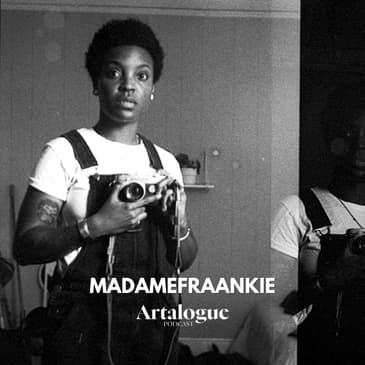

MadameFraankie
MadameFraankie’s work is centred around recontextualizing the day to day documentation of black life. She is drawn to highlighting the various ways Black people hold space and occupy their time. Within her work she attempts to capture micro-communal moments, gestures of love, and curiosity. MadameFraankie’s work draws comparison of these documented themes against the social and ethical norms within American Culture as a means to reshape black narration and photographic storytelling.
She attributes the reshaping of her understanding of community and artistry to the arts and music scene in Memphis, specifically working with Tone Memphis . Having recently exhibited with the space during Miami Art Week 2023, MadameFraankie is excited for her work to take on a larger scale in both size and subject matter during her residency with Crosstown Arts. She explains how aspects of her identity like being both Black and Southern impacts how she thinks about and creates art. We learn about her upbringing in the military and how moving around the world produced a longing for aspects of identity and a sense of home that she now conjures in her photographs. Living in Memphis, MadameFraankie turns her camera towards the mundane aspects of Black life, championing the joy and tenderness in her community.
Connect with us:
Madison Beale, Host
Croocial, Production
Be a guest on The Artalogue Podcast
00:00:34
Speaker 1: Madame Fraankie's work is centered around
00:00:36
recontextualizing the day-to-day documentation of Black life.
00:00:40
She is drawn to highlighting the various ways Black people hold
00:00:42
space and occupy their time. Within her work she attempts to
00:00:45
capture micro, communal moments, gestures of love and curiosity.
00:00:49
Madame Frankie's work draws comparison of these documented
00:00:52
themes against the social and ethical norms within American
00:00:55
culture as a means to reshape Black narration and photographic
00:00:58
storytelling. Frankie, welcome to the show. Happy to be here.
00:01:03
How did you get into photography ?
00:01:06
Speaker 2: It's been like a retrospective look, I think. In
00:01:08
the end, I've discovered that I've always been into it, with
00:01:11
obsession with family photo albums and stuff like that and
00:01:13
just staring at an image one image per hour in particular,
00:01:16
like my mom in front of a car and things like that. So since I
00:01:19
was a kid but actively participating in it, I would
00:01:23
have started in 2017 shooting digital and then taking it way
00:01:27
seriously and switching over to film in 2020.
00:01:31
Speaker 1: What assured that shift to film?
00:01:34
Speaker 2: It was. So what I was finding myself exhausted with
00:01:37
and shooting digital film was like having way too many
00:01:41
pictures. Like I would go to a event. I got so many great shots
00:01:43
but you would just 800 images In reality. It's ridiculous. 50
00:01:49
images in reality is actually ridiculous when you look at it.
00:01:54
So it was wanting to one adopt a newer process, like something
00:01:58
that was going to force me to have to be serious. There's no
00:02:03
out in your seriousness with film. It's either the limitation
00:02:07
on how many shots you have or what are you shooting, how much
00:02:10
time you spend on a moment. Like it all just brought that
00:02:13
intentionality for me, so I made that switch.
00:02:16
Speaker 1: Did someone teach you how to shoot film, or were you
00:02:18
teaching yourself?
00:02:20
Speaker 2: I was teaching myself . I want to say it started also
00:02:23
because during COVID there wasn't much to do except get on
00:02:25
YouTube, learn new skills. So then I want to say this started
00:02:28
rolling in to watching folks take pictures. It started
00:02:31
because it was like a research. At the time too, folks were like
00:02:34
, hey, I'm picking my daddy's film camera or whatever. I got a
00:02:37
daddy's film camera. Yeah, it was just on YouTube looking
00:02:41
around. And then I remember calling my dad and asking him
00:02:44
like, hey, can I use your camera ? And he said yeah, and then I
00:02:48
just switched over and started experimenting, even with the
00:02:51
developing side of it. I'm also pretty hands on, so it's all
00:02:55
been really, really exciting for me. Yeah.
00:02:59
Speaker 1: I love that idea of lineage that comes through your
00:03:01
work, that even down to your camera. That's part of your
00:03:04
family, part of your history.
00:03:07
Speaker 2: It's more the lost memory. My mom reminded me I
00:03:10
think I went home talking about it or something like about
00:03:13
cameras and stuff, like dad's going to be getting his film
00:03:15
camera or something, and then she started mentioning that she
00:03:18
had one. I was like what do you mean? You have one, because
00:03:20
we're like close. So my mom locked in. So to find out that
00:03:25
she had one was confusing to me. And then she showed me the
00:03:27
suitcase that it was in and I realized that I had been looking
00:03:30
at that suitcase and so I was like five, it was just like this
00:03:32
metal suitcase that I had believed that was holding all of
00:03:34
her like versatility and stuff. But it was just a camera that
00:03:37
she'd had since college because she took photography in school
00:03:40
and yada, yada, yada yeah. I just was like wow, so you both
00:03:44
have cameras, you have roots in photography and it was just mind
00:03:49
blowing and both exciting. I felt like a surgeon, like new
00:03:52
connections and stuff.
00:03:53
Speaker 1: So yeah, yeah that sounds like an amazing feeling.
00:03:57
What does it mean to recontextualize the
00:03:59
documentation of Black life?
00:04:02
Speaker 2: After I discovered what I was shooting and what I
00:04:04
was looking for, getting into photography and looking at
00:04:07
images and not really seeing my community photographs in its
00:04:11
full spectrum, just in photo books and typically certain
00:04:15
photographers are shooting a certain thing and what I was
00:04:18
looking for was not being shown and then also saying where I
00:04:23
live. The stories that get put out about my community they're
00:04:27
very one sided flat and I don't think we have the opportunity to
00:04:31
be photographed in a way that's overwhelmingly amounts of
00:04:36
curiosity or overwhelming amounts of solid families and
00:04:40
stuff like that. So, wanting to make that shift until it becomes
00:04:42
something that feels so, even though the work is mundane
00:04:45
images it becoming so full of it that it's like you might look
00:04:50
at the work and one day be like there's lots of this stuff. I
00:04:52
see this stuff all the time. So I'm not necessarily a native
00:04:55
Memphian, as someone who's adopted the city as like home
00:04:59
for me. Memphis is a very authentic and genuine space.
00:05:03
It's not flashy or anything. It's even down to the buildings
00:05:07
there are trying to do a lot of renovations, but it's a very
00:05:10
honest city. I've been to, like St LA and Chicago, and it's
00:05:13
really. You can often find folks are trying to prove a certain
00:05:18
status or whatever, but we don't really deal with too much fluff
00:05:21
here. Who are you for real kind of thing. So I think that's one
00:05:24
of my favorite things about the city and it's yeah, it's really
00:05:29
. It's a pretty calm place, like it's easy going pretty southern
00:05:34
in its pace. You can pick up a conversation with somebody up
00:05:37
the street, as long as you are coming with you know being
00:05:41
genuine kind of thing.
00:05:42
Speaker 1: So yeah, yeah, so you're not from Memphis. Where
00:05:46
were?
00:05:46
Speaker 2: you born, born, so my dad was in the military,
00:05:49
retired now, and so I was born in Los Angeles and so we moved
00:05:54
just a bit. I probably have a very short list in comparison to
00:05:57
other folks who've been to Nebuchadnezzar or whatever, but
00:05:59
yeah, we moved a little bit. So, born in Los Angeles, spent a
00:06:02
time in Virginia, spent some time in Bahrain, I was like
00:06:06
three or four years and then moved to Mimington, tennessee,
00:06:10
and then I was actually in Memphis until college Wow, which
00:06:14
is for those who are not from like 45 minutes up the street,
00:06:18
yeah.
00:06:18
Speaker 1: That's amazing. Do you think that, growing up in
00:06:22
different spaces, especially Bahrain, do you think that finds
00:06:25
its way into your photos?
00:06:27
Speaker 2: I think maybe my this I don't have it as much as I
00:06:32
did, but this constant outside looking in perspective, I think,
00:06:36
is one of those things that kind of, though Memphis still
00:06:40
feels very home to me, I still feel like I still see it, this
00:06:44
is what you guys got going on. It's still very much a you guys
00:06:47
kind of thing.
00:06:48
Speaker 1: That's so interesting , yeah, yeah. And what inspires
00:06:53
your photos?
00:06:56
Speaker 2: Energy, because I don't necessarily like even for
00:06:59
this last body of work I was given a topic, but typically if
00:07:02
I'm just shooting free range, it's just energy, any moments
00:07:06
that kind of speak to my heart, something that just catches,
00:07:10
just things that I'm drawn to. So it's often it usually has
00:07:14
involved, like kids in some form or fashion, one of the honest
00:07:17
places to perspective, get a perspective from view of the
00:07:20
world or whatever. So sometimes I am drawn to if there is
00:07:23
anything going on, if it's a kid and their family, I'm drawn to
00:07:27
that. But typically it's just, yeah, black storytelling. So if
00:07:30
I see a moment that kind of feels like oh, this is speaking
00:07:32
to me, then I photograph that because oftentimes those moments
00:07:35
won't be what someone else will photograph Do you have a
00:07:38
favorite photograph you've ever taken. It fluctuates, but
00:07:43
currently my favorite one is King of the Hill, which was
00:07:46
after the Elada exhibition. It's that large image of a kid in a
00:07:51
little bunch of kids in the living room but one kid in
00:07:52
particular center obsessed with that image. I think a lot of
00:07:57
images from that work I it feels like divine capturing because
00:08:02
again, shoot on film like you got one shot, maybe two shots
00:08:04
with the particular 120 roll that I was shooting. So I was
00:08:08
pretty floored that I was able to capture that. I knew what I
00:08:10
wanted but to have it and it check also all of my photography
00:08:13
boxes like lighting and contrast and storytelling and
00:08:17
placement, like all of it is there.
00:08:19
Speaker 1: I think that's my favorite one, right now You've
00:08:22
just come back from exhibiting at NADA in Miami with tone from
00:08:25
Memphis, was that?
00:08:26
Speaker 2: your first art fair? Yes, as a featured artist. Yes,
00:08:30
I do also work for tone as a marketing director, but that was
00:08:33
my first time we're artists range. That was my first time
00:08:36
featured. Yes, as an artist and a fair.
00:08:41
Speaker 1: What was it like to attend the fair as an artist who
00:08:43
was having their work showcased ?
00:08:46
Speaker 2: Man. I think it was incredible. I think like the
00:08:49
standing was exhausting. But, yeah, have an opportunity to
00:08:54
speak with a wide range of folks , participate in the arts, like
00:08:57
curators to gallery owners, the actual artists themselves I
00:09:01
think it was just great. I can have an opinion about the work,
00:09:06
but to hear folks involved in the works opinions because I've
00:09:10
also had even the exhibition I have a folks who are just
00:09:12
general consumers, like just human beings, just existing and
00:09:15
interacting with the work. I know how they feel about it, but
00:09:18
it's also really cool to hear people with different eyes react
00:09:22
to the work. So that was it was incredible.
00:09:25
Speaker 1: Did anything really stand out for other people's
00:09:27
interpretations? Did anything strike you?
00:09:30
Speaker 2: Honestly, I think it was more so that I feel like the
00:09:34
message was delivered. I don't think anybody necessarily named
00:09:37
something that was like something that I didn't want
00:09:40
folks to get from the work, but I think it's also. It's just as
00:09:43
meaningful. It seems to resonate with everyone. I think that,
00:09:46
for me, was one of the biggest takeaways. Like wow, like I'm
00:09:49
not just making this up, this is powerful stuff. So I think yeah
00:09:53
, I think it would be that.
00:09:55
Speaker 1: Can you tell me a bit more about tone and the art
00:09:57
scene in Memphis?
00:09:59
Speaker 2: Yeah, tone is a nonprofit black arts
00:10:02
organization that's been existing on the scene Since, I
00:10:06
want to say like 2014, and recently acquired a physical
00:10:10
space in 2019. And the goal of it is just to elevate black
00:10:15
communities in the full spectrum . So just any art form,
00:10:18
professional development, artist development, just giving space,
00:10:20
a platform for black folks to rise and shine. And then, in
00:10:24
terms of the art scene, I'd say it's one that is bubbling kind
00:10:30
of, as the same way as the city is also going through a shift. I
00:10:34
think we're doing a really great job in the music scene.
00:10:36
You can see a lot of folks with money bag yo and go really,
00:10:38
folks really not only coming out of Memphis and shining, but
00:10:41
people pooling a lot of Memphis, getting a lot of inspiration
00:10:45
from Memphis music and putting it in their music and stuff like
00:10:48
that. I think the art scene and visual arts and stuff like that
00:10:52
is bubbling. We don't have a lot of galleries, but I think it
00:10:56
really does feel like we're about to bubble over at the same
00:10:58
. So it's not like you go to LA and you go to and I've only been
00:11:01
LA once, yeah, I've been born there but in assuming that even
00:11:05
in a quick Google that you can find cities that have just heaps
00:11:07
and heaps of galleries. We're not necessarily made that way
00:11:10
yet, but like folks coming out of school and the people that
00:11:13
we've been interacting with, just seeing a lot of beautiful
00:11:15
stuff coming up, so I think it's . I think it's, I think it's
00:11:18
growing for sure.
00:11:20
Speaker 1: Yeah, what was your journey to becoming an artist?
00:11:25
Speaker 2: I think so I'll say like Tom really shifted that for
00:11:29
me, because first I didn't know what the community was or
00:11:32
anything like that, so I was just winging it. I wasn't even
00:11:34
necessarily taking any of it seriously until joining just
00:11:38
running a program that Tom was putting on A lot of it is having
00:11:42
to find a community to get in. I always wanted to be an artist,
00:11:45
even as a kid. I was always drawn to this idea of being
00:11:49
creative and doing your own thing. I was never really great.
00:11:51
I'm great in terms of charming the people. If I need to be a
00:11:55
retail sales kind of thing would do I want to do that kind of
00:11:58
thing, working a traditional job ? not necessarily. Yeah, I
00:12:02
always wanted to be a creative and an artist. I think that for
00:12:06
photography, once I realized because this is all still very
00:12:10
new to me but there is a problem to solve and I can solve it
00:12:13
with art, both in making the work and in even with this last
00:12:17
exhibition I had an opportunity to teach classes and stuff like
00:12:19
that. It's pretty locked into this, but this for me has been a
00:12:24
very revolutionary moment for me, like photography. To me it
00:12:30
was like music and photography existed together and I was
00:12:34
having a bit of a push and pull, like what I want to do. But I
00:12:37
think that what I have learned in this recent, within this year
00:12:41
, is that who I am is like I am a photographer who is a musician
00:12:45
. So for me I have just acquired officially, like who I am in
00:12:49
this world artistically I am a photographer, visual storyteller
00:12:53
, who makes music kind of thing.
00:12:55
Speaker 1: I think it's so important to recognize that we
00:12:59
exist in so many different ways and there's not just one way to
00:13:02
do something, and there's just not one path that we need to
00:13:04
take and those can exist together. As a musician, do you
00:13:09
think that the art and the music ever come together in an
00:13:13
interdisciplinary approach?
00:13:15
Speaker 2: I don't think they have yet. I'm open to exploring
00:13:18
that because the way that I see these images is blips and movie
00:13:22
scenes and at one point in time I wanted to score a movie. So at
00:13:25
some point potentially maybe writing music to those images or
00:13:28
something, but I think I have not yet figured out what that is
00:13:31
. But I'm not against the idea that those one day can be. Can
00:13:35
you tell me a bit about your music. I'll leave it. I guess I
00:13:39
can. But that's also been some of that turning point for me
00:13:42
that I've always struggled to talk about the music. But the
00:13:46
photography side has been so easy, even with my goal and the
00:13:49
mission and everything. With music I guess I can say it's
00:13:52
very. It's not experiments on the traditional sense but I just
00:13:55
am always experimenting with kind of like your typical sounds
00:14:01
, like influences, being like like Eric Abadou and the Angelo
00:14:03
and stuff like that. It's very. I've learned that music is very
00:14:07
it's for me. So when I'm making stuff, I tend to make things
00:14:10
that when I play for people they say it's like therapeutic and
00:14:14
hypnotic in a way, but still can maintain of those like
00:14:17
traditional sounds or on the floor or whatever. Just it's not
00:14:20
. It's not. Yeah, I struggled to talk about it. I do have music
00:14:25
out. I do work heavily with the artist name to leave us our fear
00:14:28
from Memphis as well and love it. It's a big part of me. But
00:14:31
again, I still struggle to speak on it on a technical term and
00:14:35
what am I doing with it or whatever?
00:14:37
Speaker 1: Yeah, I checked out. I think you have one song on
00:14:39
Spotify right now. I checked it out.
00:14:41
Speaker 2: Yeah, yeah, yeah.
00:14:42
Speaker 1: Yeah, thank you. As someone who speaks multiple
00:14:45
languages, how does the silent medium such as photography lend
00:14:48
itself to your narrative work?
00:14:50
Speaker 2: Yeah, so I Spanish, italian and I say bad French.
00:14:53
Well, yeah, I think so. When I was thinking about this, I think
00:14:58
that it's more. That language to me is just like this constant
00:15:02
search for understanding.
00:15:04
Speaker 1: What stories do you see yourself telling when you
00:15:06
turn the camera towards yourself ?
00:15:10
Speaker 2: So that's actually a funny question because in the
00:15:16
residency I'm jumping ahead but I'm learning that a lot of it is
00:15:20
going to be this like deep exploration of self. So my folks
00:15:24
in the military long-shore stores and I spent a long time
00:15:28
believing that I was going to have an option to be from
00:15:32
somewhere and for like a visa for somewhere, like cool, so
00:15:35
they're in the military, it's not really cool to be from the
00:15:39
country, or maybe even from the South. Right, my daddy's from
00:15:41
Mississippi, my mom's from Indiana and I would lean into
00:15:45
this idea that I can pull from places that weren't mine and
00:15:48
just trying to attain an identity that was never going to
00:15:52
be mine. So what it is leaning into, what is actually me, who
00:15:56
is Southern, and same thing with Black identity. It gets pretty
00:15:59
deep. But there were a lot of things that I was running
00:16:02
towards or shying away from because I was led to believe
00:16:05
that it wasn't a part of my identity or wanting to grab
00:16:09
things that I didn't necessarily need to be my identity for me
00:16:12
to indulge in or whatever. So I think it's a lot of highlighting
00:16:16
the Southerness about me and appreciation of just Blackness
00:16:19
throughout and the different ways that it can show up and the
00:16:22
ways that all that I am and what that means in this
00:16:26
iteration of Blackness and being Southern Reflection, deep
00:16:31
reflection, in short.
00:16:34
Speaker 1: What kind of qualities make someone Southern?
00:16:36
I'm really interested in explaining that to someone who's
00:16:40
never been to the South. What does it mean to be Southern?
00:16:43
Speaker 2: I think it's how you feel. It's like fireflies and
00:16:48
seeing the stars and long conversations, and even though,
00:16:53
like Southern's can be known for being like nice, mean in a nice
00:16:58
way, or bless your heart, and stuff like that, my mom being
00:17:02
from the North and my dad being from the South, I would say he
00:17:06
went over in terms of the culture, adaptation, of being
00:17:09
like we'll do things at this speed or we'll. This is type of
00:17:12
food that we must eat and what food brings community and mess
00:17:16
with. Eat all the Southern foods now, black Southern foods now,
00:17:19
but it's, it's that stuff and the way folks talk, whether it's
00:17:23
slow, fast, we're like it's just the expression. And then
00:17:26
how you yeah, just how you interact with people, it's a lot
00:17:28
different. I find, in the North and my experience, that things
00:17:33
are like it's pretty brisk and I found in times where I want to
00:17:38
like ease into this, like I want to the sudden charm, and when
00:17:43
there's no space for that, I struggle. So I think it's. I
00:17:48
think it's that and I'm and I think it's also what I'm doing
00:17:50
is wanting to do a focus of what I'm reading and what I'm taking
00:17:54
in, to start getting a deeper understanding, even for myself,
00:17:57
because all I know is that where I was raised and how my daddy
00:18:00
is and stuff like that. But I think there's so much more to
00:18:02
learn to be able to better articulate it. So that's what
00:18:06
I'm also.
00:18:08
Speaker 1: So what artists do you see yourself in dialogue
00:18:11
with?
00:18:12
Speaker 2: I am having really into the work of Andre Wagner.
00:18:17
He's a guy from Omaha, nebraska, and really big in New York
00:18:19
right now and he does work that is like it's in the same room.
00:18:25
So Andre Wagner will say Gordon Parks of Caramay, wing, and
00:18:29
there's Deanna Lawson. She typically shoots in color, but I
00:18:32
find that I'm really attracted to these four, their work
00:18:37
specifically because it feels really based on just simple
00:18:40
observation and the highlighting of these mundane moments. Andre
00:18:43
walks the streets and captures kids running and he shoots
00:18:47
typically in black and white. This is like a commission piece
00:18:50
for Gordon. I think my attraction to his work in
00:18:53
particular I would bring this up . But like the way he shot
00:18:55
Muhammad Ali was very. It was so honest and genuine. You could
00:18:59
see how grandiose he was, which also he was a man. I think he
00:19:02
did a really great job with that , doing it in black and white,
00:19:05
in the way that he is soft I think that's also what I want to
00:19:09
continue to have in my work and softness about our people. And
00:19:13
then Deanna, like I said, shooting in color, and I tend to
00:19:15
stray away from color unless there is a need for it, because
00:19:21
black and white keeps me honest and I think she does, like color
00:19:24
feels so necessary in her work because it's about capturing not
00:19:27
just the people but like the surroundings. So she'll shoot
00:19:28
someone in the living room and you need to know that the carpet
00:19:31
was blue and you need to know that the wall was red and stuff
00:19:34
like that. It's those things and Carrie May Williams, of course,
00:19:37
with the kitchen series obsessed, like a story just
00:19:39
based off of all the things that happened just in that kitchen,
00:19:42
like just in the kitchen, like cycling through these so many
00:19:45
stories that happened in the kitchen and how I believe that
00:19:48
it's easy to sleep on the idea. Yeah, it's just a kitchen, but
00:19:51
life happens here, transitions happen and all of that. So I
00:19:55
think it's that stuff like highlighting again those like
00:19:58
things that you might look over and these are the moments, kind
00:20:00
of thing.
00:20:02
Speaker 1: Absolutely. I'm so interested in what you said just
00:20:05
now about black and white, keeping you honest. Can you tell
00:20:09
me more about that?
00:20:10
Speaker 2: Yeah, Thank you. So I I feel like I'm relatively new
00:20:17
in the photography world and I spent a lot of time once I
00:20:21
switched over the film, because shooting with film keeps me
00:20:24
intentional and it's because of that limitation and then. So
00:20:28
then the next decision was like are you gonna shoot in color,
00:20:31
Are you gonna shoot in black and white? Simply, whatever you
00:20:34
have in the camera is what you have. And after looking at the
00:20:37
work like I was shooting color and shoot in black and white I
00:20:40
would notice that sometimes what would have pulled my attention
00:20:45
was someone has red shorts and I might miss a moment that was
00:20:47
happening over here because I wasn't paying attention to what
00:20:50
I actually wanted to capture. In the end, Could I look at the
00:20:52
work and maybe it was there, but I realized that it was this
00:20:56
color that kind of pulled me, and so, when I can skip out all
00:20:59
of that, it's about the eyes and the lighting and just pure
00:21:03
moment. So that's all that is is , I find, the most sincere way
00:21:07
of storytelling.
00:21:11
Speaker 1: What motivates you to create?
00:21:14
Speaker 2: The type of storytelling I'm trying to do.
00:21:15
It's starting to feel like it's brewing up this idea of like
00:21:19
mundane, black life, just going out and capturing the moments in
00:21:24
your house, on your porch. I feel like there's a lack Just
00:21:28
because you saw one like, until it becomes just abundant. I
00:21:33
think that's one of my motivations to create and I
00:21:37
think lately, as I've been like reflecting, it's starting to
00:21:40
feel that already in itself to me feels necessary. But what I
00:21:43
feel like we're experiencing in particular, like in the US, is
00:21:46
this idea of erasure, like this insane erasure that's happening
00:21:50
with education and changing of language and stuff, and so I
00:21:55
think it's becoming necessary to share truths through images,
00:21:59
because the stuff is, it's getting crazy for you, yeah.
00:22:05
Speaker 1: Do you ever deal with creative slumps and how do you
00:22:09
move through them if you do? Mm-hmm.
00:22:12
Speaker 2: Yes. So the answer is yes, and so what I've been
00:22:16
doing lately is trying to make everything research and turning
00:22:22
everything into research, everything becomes interesting
00:22:26
so that, like I can start pooling from anywhere, truly
00:22:30
trying to stay curious, asking questions. Do I know about why
00:22:32
this thing works this way? If I don't, let's look into it,
00:22:36
Watching things that I might not typically be interested in.
00:22:39
Somebody wrote this let me I'm thinking about. Let me see what
00:22:43
you're in product with. What was your project, what came of it?
00:22:46
And oftentimes I'm like pulling stuff out of that all the time,
00:22:49
just writing these. One line is down and I'm like why does that
00:22:51
make you feel? Feeling things keeps me feeling a slump. Feel
00:22:56
things that have been helping as well. I typically can be a
00:22:59
pretty nonchalant individual. Deciding to care about things is
00:23:03
better. Get you out of a swamp real quick.
00:23:07
Speaker 1: I love that. Deciding to care what a great concept.
00:23:12
Speaker 2: Yeah, can I?
00:23:13
Speaker 1: ask what are some of the quotes that are percolating?
00:23:16
00:23:16
Speaker 2: at the moment. Oh, let me see, I get something from
00:23:19
the bear. I love the bear, which was a show that I was
00:23:24
never gonna watch, love it. So sometimes I'm gonna like to
00:23:27
quote. It's more like I want something and get it in again.
00:23:29
This is not like revolutionary or anything, but like the bear
00:23:33
literally in there. They're talking about like why do you do
00:23:36
this, or why are you doing it in this way, or what is this all
00:23:39
about? But it's when you care, let's listen to the conversation
00:23:43
. Don't just have a restaurant and make really great food, but
00:23:48
you can take it even further than that. You can walk and
00:23:51
listen to folks' conversations, you can engage, you can overhear
00:23:54
something and you can decide to care about that and change
00:23:57
someone's life. So it's things like this Like okay, I wanna
00:24:01
care that deeply, and then what are things that are really
00:24:03
important to me? And then how can I take it up a notch? And so
00:24:06
the same. That's what I'm like even experiencing right now in
00:24:08
the residency. What are more ways that I can start
00:24:12
experimenting with photography and get really involved in it,
00:24:14
as opposed to just taking the picture and telling the story
00:24:17
that way? Are there other ways for me to print the image and
00:24:20
other ways to like use my hands with materials or like bringing
00:24:23
in, like my family stories and stuff like that. What other ways
00:24:27
can I do it? I'm not sure if it's gonna work, but that's what
00:24:29
I'll be doing is like experimenting with it, and that
00:24:31
comes from this idea of caring and like the details and like
00:24:34
ways to stress myself.
00:24:37
Speaker 1: Yeah, so, speaking of things that have held on to you
00:24:40
, what's some of the best advice that you've received as an
00:24:43
artist?
00:24:44
Speaker 2: Maybe it's more like a recurrent advice. Is that just
00:24:51
create. Like sometimes you'll. Sometimes, you know, you're like
00:24:54
, oh, I'm feeling so inspired today and I'm gonna go to the
00:24:59
studio, I'm gonna sit down and do this thing, but and it's
00:25:02
gonna be great, and you're working and you're like, wow,
00:25:03
I'm killing it. But then you might wake up one day and just
00:25:06
realize I'm not really excited to go to the studio, so I'll
00:25:10
skip it today and I'll just wait for the next time that I feel
00:25:11
excited. But learning that these are, that's just another energy
00:25:15
to create in and you can create something else. If you're
00:25:17
always making your work when you're at your peak of happiness
00:25:21
, then you're only speaking to that narrative. Go sitting in a
00:25:25
studio where you're bored. What is your bored work? What does it
00:25:27
look like? So I would say it's just, yeah, just to create. It's
00:25:31
always create.
00:25:34
Speaker 1: So, finally, to talk about your residency at
00:25:36
Crosstown Arts, can you tell me a bit about what you're working
00:25:40
towards right now?
00:25:42
Speaker 2: Yes, I've been sitting down experimenting with
00:25:45
different ways that I can do photography and or display it.
00:25:49
At least I'm working with ideas of what it is to keep something
00:25:53
alive, like there's this idea of if you say someone's name or if
00:25:57
you repeat things, that's what keeps it alive. And also my mom
00:26:00
is a painter, went to school for it, and my grandma is a
00:26:06
seamstress, and so my mom one time was like painting just all
00:26:09
the time and then eventually papered off just because of life
00:26:11
. But my grandma, it's art to them, like they moved through it
00:26:16
and it's like an art practice that never really gets
00:26:19
acknowledged as that. And so even for me, like growing up,
00:26:22
starting to reflect on those different moments where I
00:26:25
actually was witnessing my grandma working at her practice
00:26:28
and how she was making things for the family, and then how my
00:26:32
mom had like stuff laying around there was art tools that I
00:26:34
never really thought about, even the photography stuff, how that
00:26:36
slipped past me until a couple years ago, realizing that I had
00:26:39
been surrounded by her art, her chalk and film canisters and
00:26:43
things like that. And I'm wanting to practice with putting
00:26:47
photography onto fabric and like starting to work with what
00:26:50
it is to like stitch and stuff and like having those
00:26:53
conversations with my mom and my grandma, to have those
00:26:57
conversations. So when somebody asked me about these pieces,
00:27:00
like I can name, I can name my mom and I can name my grandma,
00:27:03
so the legacy, and like how can I physically incorporate legacy
00:27:07
into the work and things that just remind me of them? It's
00:27:10
just, I guess it's just love, just like putting love into the
00:27:14
work and wanting it to be attached to the things that I
00:27:18
believe that made me and inspired me.
00:27:22
Speaker 1: What are your plans for the future?
00:27:25
Speaker 2: I would love for the work to grow like to take a
00:27:27
large platform, to exist in other galleries, other like
00:27:30
museums, potentially I would love to do talks to spread the
00:27:35
good gospel of the work, kind of thing to teach. I really would
00:27:38
love to teach on a more consistent basis, like giving
00:27:41
folks the cameras and people's hands and tell people some
00:27:44
understanding, importance of telling their stories in this
00:27:47
kind of way. I think not too many people truly understand
00:27:51
seriously. You have a camera sitting in your room and just
00:27:53
start that is your story and then and go from there. You have
00:27:56
to have something extra to just get started.
00:27:59
Speaker 1: Yeah, that kind of leads into my next question what
00:28:03
advice would you have for artists looking to get into
00:28:06
photography or someone looking to become a photographer?
00:28:11
Speaker 2: I think so. For me, I would say one start with what
00:28:15
you have. So that's a, that's iPhone grade, if that's a
00:28:19
disposal camera, if you pick up a more range, perfect.
00:28:22
Absolutely start with what you have and look at images. Get you
00:28:26
, get to get your eyes on some photographs, get photo books,
00:28:29
get understanding of what you like and what you don't like,
00:28:31
and lean into some things that you don't like, because you'll
00:28:34
also find what you do looking at what you don't like. That's
00:28:36
been helpful for me as well. Just get involved in the world
00:28:39
of photography in any way that you can. I think it will serve
00:28:42
you, frankie.
00:28:44
Speaker 1: thank you so much for being on the show today. I
00:28:47
really love talking to you and learning more about your work.
00:28:50
Speaker 2: Yeah absolutely, it's been a pleasure.
00:28:52
Speaker 1: Is there anything that you'd like to talk about,
00:28:53
anything you'd like to promote before we close off?
00:28:57
Speaker 2: I guess musically me. And to leave you something out
00:28:59
of song out on Spotify, check it out, called Papa please, and
00:29:02
then you can find me. If you're looking for music at Madame
00:29:05
Frankie, and if photography looking for me looking at the
00:29:08
same thing, madame Frankie, but M M E Frankie on Instagram and
00:29:13
the website www, www, www, www.
00:29:21
Speaker 1: Thank you so much, frankie.