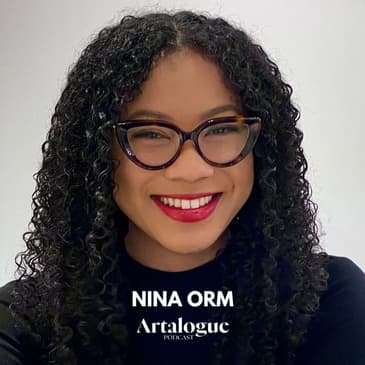
What happens when you combine a background in government policy, financial expertise, and a deep passion for creativity? You get Nina Orm.
Nina's journey from feeling "spiritually bankrupt" in finance to founding Orm Muse Collective and the Agora Fund is inspiring. Her story illuminates the critical moment we're facing in creative industries where traditional structures are crumbling, but from this breakdown emerges an opportunity for reimagining what the future of the art world could look like.
"We do things for money to survive, but art and creativity are the reasons we live," Nina shares, explaining why she's dedicated to constructing financial, educational, and emotional support systems for creators. Through Orm Muse Collective, she's created a business school specifically designed for artistic minds, addressing the reality that even the most talented artists struggle without entrepreneurial knowledge.
The Agora Fund is Orm's bold attempt to redirect capital toward underrepresented voices in art, film, and fashion. Rather than waiting for traditional investors to recognize diverse talent, she's actively creating these opportunities herself, focusing on creators traditionally excluded from investment opportunities.
Orm offers practical wisdom throughout our conversation, from establishing a weekly "financial date" to review your finances, to recognizing that hard work beats talent when talent doesn't work. Her candid advice for creative entrepreneurs ("keep your day job while building gradually") reflects both her financial expertise and her lived experience navigating entrepreneurial challenges.
Whether you're a creator seeking financial literacy, an arts professional wondering about the future of creative industries, or simply curious about how astrology might influence career decisions (yes, we discuss Saturn returns!), Nina's insights offer a refreshing perspective on building sustainable creative careers in uncertain times.
Ready to reimagine how we fund, value, and sustain art in a world that desperately needs it? Listen now and discover why Nina Orm believes we're on the cusp of a cultural renaissance.
Connect with the Artalogue:
Madison Beale, Host
Be a guest on The Artalogue Podcast
Hi everyone and welcome back to the Artalog. Today, I'm chatting with Nina Orm, a New York City-based arts professional. Nina Orm is the founder of Orm Muse Collective, a creative business school and online art gallery designed to empower the next generation of artists, storytellers and cultural entrepreneurs. She's also the founding partner of the Agora Fund, a venture capital fund investing in bold ideas at the intersection of art, culture and capital. With a background spanning editorial policy and finance, nina is passionate about building the kind of infrastructure financial, emotional and educational that today's creatives need, not just to survive, but to lead Her mission To reimagine how we fund, value and sustain art in a world that desperately needs it. Nina, welcome to the Art-O-Log.
Speaker 2:Hey Madison, thanks for having me on. I'm excited to chat today. How did you become interested in art? I always talk about my curiosity and how it's important to be curious in this life, and I got into art at a young age. My mom always talked about you're like my little Renaissance child. So I couldn't stop creating. I came into this life just wanting to make something beautiful. My parents really didn't have the means financially to go on these lavish vacations that some of my peers were going on. They always emphasized the importance of going to a museum or going to a gallery because it was so vital to understand how other people see the world outside of your own perspective. So I was just exposed to going to museums and galleries at such a young age the Yale Art Museum and the Peabody Museum, all the museums in New Haven and, of course, up in Hartford, because I'm originally from Connecticut and as I got older I just surrounded myself with creatives. I've always been inspired one way or another.
Speaker 1:Can you tell me about Ormuse Collective and how it began?
Speaker 2:inspired one way or another. Can you tell me about Ormuse Collective and how it began? Ormuse Collective for those listening, it is a creative business school and it's going to be an online art gallery, and how that kind of came to be is a culmination of events. So here I am. I'm currently in New York City and I was actually working in finance because I went into this industry because I knew I wanted financial stability. I wanted to have that security to be able to do the things I wanted and afford the things like hobbies I really loved.
Speaker 2:But the longer I was doing it, the more I realized this is just not for me. I always say in that moment in time I was like, oh my gosh, I'm like spiritually bankrupt. There was nothing that could like really alter my mood to love it. So I got like real with myself when I got back to basics of what do I love, because at this point in time, like I had already had a career in government and politics, I went into finance and now I'm like at the beautiful point in your 20s and your late 20s. It's like you either go to grad school, you run a marathon, start a podcast, or you do what I did and you just blow up your life and start anew. So I was just like what do I like? I like to help people. I love advocating for causes I believe in. We learned that from government. I do like numbers. I find like analysis very interesting and I can't stop doing it. And just understanding like how those markets move fascinated me, and just learning and speaking to so many founders and entrepreneurs in that aspect.
Speaker 2:And then I realized the third thing, which was the key to everything, was I am just a creative person, but it's so like I love to create and I love these beautiful things, but it's so natural to me that you it's like breathing, you don't think about it, it's just like you just do and you just are. And I was like okay, here's the three. I know I loved creativity, I knew I liked finance and I knew I liked advocacy and I knew that a good chunk of my support system were creative. So I'm like what's the big problem? Now it goes into okay, so we love these things. What's a problem that all of my creative friends and myself included bump into? We know how to construct and build beautiful things.
Speaker 2:The schools, like certain educational institutions, will tell you like how to hone your craft and refine it and master it. But I notice that it falls short and everybody is a little like cautious when it comes to the entrepreneurial side. Because, whether we like it or not, even even as a creative, as an artist, as like anyone bringing something beautiful into the world, you, whether you like it or not, you are an entrepreneur. At that point in time, once you started selling your work and once you're promoting it, you reluctantly become one.
Speaker 2:And that's where people started to get shaky and I thought why don't I use all my skills and knowledge to create a business school that's more in the lens for creatives? Because traditional business school will give you a case study after case study for Costco or like Amazon, and I just didn't see enough case studies for, let's say, like I've talked about Solange and like my Muse case study series on TikTok, where I'm like she built this cultural infrastructure with Saint-Heron, and it's not just a record label, it's like a digital library, it's like a place for you to create, like a studio, like all of these things. And I just thought why don't I just do this, create a 12-week syllabus for creatives and then offer, like just sitting on calls with the creatives of hey, have you thought about setting this up? Or have you thought about doing this and be? Are you mindful that this is coming up? Because you live in x state? So that's how it came to be.
Speaker 2:And then, plus the online gallery portion of, like, the mission driving a lot of the things I do is just to try and bring more underrepresented talent and people left out of the fold in the industry overall for lack of connections or just financial resources, into the limelight. So how do you affect change in the market? You got to create the market, so you had to have this gallery to show the work and hopefully make a dent where it really matters.
Speaker 1:And we were talking about this a little bit before, but astrology is a huge part of your life. Can you tell me more about how it's guided you in your professional life so far?
Speaker 2:Yeah. So I will say for my astrology lovers out there, this did also happen at my Saturn return, which is a point in one's life where you astrologically grow up like Saturn's, like the planet of karma. It also what I like to say the mean older brother you had growing up versus the nice older sister that took you shopping and you went, got sushi and, like life is good, you got your nails done. The older brother they're rough around the edges, they're rough in their delivery, but he was ultimately right. That's saturn and it happens when you're turning 27 to 30.
Speaker 2:So I always tell people what was happening in your life. Think about it. Were you getting married, were you changing jobs, did you go back to school? These like pivotal moments. But then what you thought was for you no longer is applicable, and then it like crumbles in an astrological lens. So for me, because I loved astrology and I knew that was coming up, but I like it's one thing to know and it's one thing to experience, I was just like you know what.
Speaker 2:I don't think things happen for a quinkie dink. I also think it guides you on a little bit of a path with stars in alignment, because I think there's a method to the madness, because we again we were talking about this before like astrology is like similar to economics. There's certain behaviors and certain patterns that appear with a certain line of events, and this is no different. But, in essence, like your saturn return, and like my Saturn return in particular, kind of led me to look inward and think about, like really think about what was everything that I was doing, that I was experiencing, whether it's professionally, personally, whatever, really aligned with what I want to do at a like soul level. And I think when you do things out of passion, the return is tenfold versus if you just do things for I don't know, in my case, working finance for money, right, it doesn't have that longevity, it doesn't have that like legacy hold that I always talk about online.
Speaker 2:And so that had to go. So I just was like all right, creativity is the guiding light. You have these skills. Now let's see what you can do with them. So it actually helps me, like, assess the situation a little easier and be a little bit more grounded and level-headed.
Speaker 1:And after this happened, after you started to return, maybe a couple of years later, you founded the Agora Fund. Can you tell me more about how the Agora Fund focuses on creatives and why you started it?
Speaker 2:Yeah.
Speaker 2:So we have Orme's Collective, which is like immediate impact of okay, here's what I know, here's how I'm going to help and this is the way to set you up for success in the interim.
Speaker 2:The Agora Fund's a little different, where it's a venture capital fund, so that means like I'm investing in companies or founders at the very early stage with the hope that they can 10x that return down the line. And by nature of venture capital, the business model is what we go or say is a power law, where we know most companies are going to fail but one of them is bound to make up for the losses of the others. And with that model being in place, I have to meet it with more scrutiny of just who gets accepted into this investment model or in this investment fund. And I wanted to start it for a couple of reasons. I knew with my experience in the more like the tech VC space that I learned at the end of the day, it's execution that matters, right, and I see all we all see it in the headlines all the time the big fancy fundraising numbers like a hundred billion and like they're creating this thing, and I, admittedly, was getting fatigued with the tech industry.
Speaker 2:There was nothing that really I felt was going to be good for humanity in the long run, whereas in the arts and culture space and even with the Agora Fund I talk about it it's like I invested in emerging visionaries in the creative industries and I market it in the way of we're bringing in the modern renaissance.
Speaker 2:We're ushering in this great new period where thoughts and ideas and beauty and I figured, why don't I get to redefine what that looks like moving forward in terms of investment in this precarious time period that we're living in now in the world? So I knew creatives didn't really get investment, but I knew that they can execute their craft well and I knew they were hardworking, but people never wanted to take a chance on it, and I think we see that in Hollywood. I think we see that in fashion, because I think we see the same like camp or group of people with the same backgrounds or educational experience. I'm like actually no, we're missing people across the board. We should actually have an expanded, more diverse view of who has a seat at this table, and I strongly believe allocating capital can effectively do that at a much faster rate.
Speaker 1:So what kind of creatives do you work with in the Agora Fund and when you invest in them, what does that money go towards?
Speaker 2:So I primarily look at creatives in the art, film and fashion space, as well as media, and you can check out theagorafundcom for additional creatives that fall under this umbrella. But a couple of things I will look at is are you from a group that's been left out of the fold? Part of that is like me investing in the founder and their vision right, which creatives tend to have a lot of that. They do that really well. Like great, what's your story? Like how did you get into this? Then it moves to what's the project or what's the company.
Speaker 2:So let's say I meet somebody, they have a great film project and it's highlighting a story we don't really see a lot of. So, for instance, it can be someone of indigenous background telling like a story we can all still relate to. Like you're unsure about what to do next and usually you go to a big studio. It's like they're like I don't know. This seems risky, but for me I'm like with filmmakers in particular, I'm like you don't need a lot, you can do a lot with less, to be honest, and a lot of the movies we talk about to this day that are the most historic didn't have a massive budget, but they have the longevity under their belt and we always talk about them.
Speaker 2:With art it's a little different. I look at a couple of things of just where are you at in terms of the amount of work you produced, where you are at in your artist career, because art's a little slushy in that way. I think we both on and we all know this. It's so opaque, this industry, so part of the fun can also be acquiring some works and whatnot. And then for fashion, it's easy to stomach for all of us, it's just fashion designers.
Speaker 2:You have this clothing company. We know the traditional metrics to look at that. Oh, you need X amount of dollars to open up a store, to manufacture the clothes, to ship it, all of that. And of course there are the tech adjacent creative companies that come through. So that's with the tech background or tech VC background. I'm like I know exactly what I'm looking at and we can go on and on. But I just really wanted to give it an opportunity in general for creatives to have a seat at the table and to remind everyone that this industry, the creative industry, really does pioneer and set the tone for entire economies to be built, and I think it's time that we revamp our own industry while we push everybody else into the right direction, and that starts with having different perspectives and diverse backgrounds at this table.
Speaker 1:What is the process of funding these creatives? So from the minute they send their proposal to your inbox to when they get funding?
Speaker 2:When you go to the website, so theagorafundcom, you'll see like a button and it says apply here. And then I ask you a ton of questions that most investors will just ask you, point blank. The couple that are more specific to me in the fund and, of course, creatives little variation but in essence. So you go to the website, you click on the button, you fill out the form You're going to tell me about how amazing you are. You're going to attach, like your pitch deck or your portfolio, whatever it is, and you're going to answer a couple of questions like what's your monthly burn rate. And I set it up that way intentionally because you're going to be learning as you go. Nobody ever 100% knows what they're doing, that's okay. Just know that this is a learning exercise and you have food for thought, because I would have asked you that on a call anyway. So it helps streamline it. You go through those questions, you submit it and then, because I have the pride and joy of being the woman that has to review it all, I get back to you within four to six weeks because I love to just absorb your project, understand, like, where you're coming from, what's out there there, and then we set up a call every now and then I get a very bold individual which I can respect. Where did they find my like personal email? And they like send me their decks directly.
Speaker 2:I dissuade you from doing it only because I'm like the extreme, like taipei me is. This is how I organize everybody. I want to get to everyone in an efficient fashion and this is how I do it. But I'm sure down the road, when the Agora Fund really kicks off and I have an amazing business partner, I'm sure she'll streamline it even faster. Maybe you can send it to her and then we have the call and then I face-to-face pro tip. If you ever meet with an investor, they usually know on the first call whether they're going to write the check or not. Just so everyone knows of like. Maybe it might take a second call, but usually it's like when you're on a date, right, so you know. So, just for food for thought for everyone listening, you usually know once you hop off the call it's a yes or no. Yeah, that's a process.
Speaker 1:The Agorafund nurtures bold ideas and risk-taking, and I'm wondering what does that look like right now in the creative industry?
Speaker 2:I have to say I usually think bold ideas and risk-taking as controversial as this might potentially sound, I think it's 100% true. I think bold ideas and risk-taking means like breaking from the traditional fold, and breaking from the traditional fold means allowing people into these rooms, into these spaces, that didn't come out of an Ivy League institution I know it's so scary. What do you mean? You didn't graduate out of Yale or Harvard. But also, just again, like these more diverse perspectives, diverse schools of thought, I think, especially in the art world, I think we can do a much better job celebrating everyone while they're A alive and B. There's so many beautiful cultures that have.
Speaker 2:I always usually make an argument on the Safe Space Salon series, on my personal TikTok, where we need to start redefining how we look at things like masters right, it's very Eurocentric based, and I think when we talk about portraiture, we usually refer to Eurocentric artists, but I think, like Wiley excuse me and Amy Sherald really set the tone of no, actually there are other great portrait artists out there that we should be considering and, of course, there's Wendy Redstar, who's an Indigenous artist here in North America.
Speaker 2:There's incredible talent everywhere that we just haven't looked at and I think it's time that we expand our horizons, which means maybe we start to have a conversation as an industry that you don't need to be anchored in New York, you don't need to be anchored in LA, because I think that's also half the battle. You have to be in the proximity of all the greats in the room discussing who's the cool kid, who's the next Basquiat, and I'm like I don't think the next Basquiat is based in New York. I think the next Basquiat is either in the Midwest, it's up in Canada, they're like in a remote part of South America. I think it's time for us to be a little less reactive in our approach in terms of appreciating the vast amount of talent, and I think we'll be able to have an interesting, more exciting market in fair circuit, moving forward.
Speaker 1:Yeah, I completely agree with you about moving away from these poles or anchors of art in North America. Where I live, I'm in the center of Canada and I've seen some of the most interesting art being made by people who are in their BFAs at the university or just actually self-taught Indigenous artists who have moved from their reserves and come to Winnipeg and are sharing what they're making. So I think that's really exciting. What are some of the best ways that an artist can develop their ideas?
Speaker 2:First, and foremost, just start. It sounds so simple, but I find people get in their head a little too much oh, I don't know. I'm like just write it down, Just, I don't care how messy it is. How can you ever be a master of your craft if you're not willing to be mediocre? A, you just have to start, and then B, you just have to show up every day. Right, Execution is king.
Speaker 2:I don't care if it's like what, like you sketched a little like heart or something, like something that moves the needle each and every day. Maybe it's not an art-based thing, Maybe it's oh, I need to do admin stuff so I'm not stressed and overwhelmed because I put it off for too long and now I don't have the time or I'm not in the great headspace to create, and then it's just this like vicious cycle. So I think getting started, being disciplined, doing something every day, and then confidence Confidence is a huge thing. I think you should be your biggest cheerleader. I can't tell you the amount of times I've seen people with half the talent but all the audacity move past an individual just because they have the sheer confidence and the belief that they could. And then they did. So I'm like there's plenty of talented people. You have the talent. Now you just need the confidence. And now you'll surpass that person and exciting things will happen. So start discipline and then be confident.
Speaker 1:Yeah, I think you're so right in the sense that confidence and discipline are the two things that can really push beyond talent, because you can have talent, but if you don't have the confidence and the discipline to push forward, you are stuck in the same spot. One of the ways that you invest in creatives is through encouraging financial literacy. What are some tips that you could give artists right now to become more financially literate if they don't know where to start?
Speaker 2:that you could give artists right now to become more financially literate if they don't know where to start. Sometimes I give out the advice and I'm like oh, I hate doing it too, but you still have to do it. So the first tip is devote a day, one day it's like your financial date day where you have to review what your current state of finances looks like and be honest with yourself. It's not going to be comfortable, but it'll be good for you. It's like working out oh, this sucks, but it's good for me in the long run. Temporary pain for a long gain. And so for me, I pick Sundays as the day where I review everything, everything money that's either owed, whether it's net 30, net 60, net 90. I hope it's never net 90. We're waiting for that to come in. And then you of course, look at the big ugly of oh, now I got to look at my expenses. What do I have to pay for? How much is rent Utilities right? And, if there are savings available to you, how much runway do you have there? And I usually say, like people say, try to have three to six months. I really I think that's a luxury for most Try to make it to the first 1,000 liquid, which means have $1,000 ready cash on hand and then go back to maybe trying to pay down any debts you've accumulated. So set a day, you pay attention to that and if you have any debts, you assess it. And also I'm always like guys if you can't afford to pay down a debt, you can always negotiate it down. Most people don't know this and I'm like you can negotiate it down. I know it happens. It's like you're waiting for the payment to come in. You're like, oh, but now I got to pay for this thing, so I got to swipe my card. Know that everything is negotiable. It's a big theme.
Speaker 2:The second thing is I personally love AI for assisting me in research. So you can actually ask, like whatever software AI software that you choose to just create a plan of a syllabus either. Hey, just generate like a 12 week financial syllabus plan for me to improve my financial literacy If you don't want to spend the hours right to figure out on Investopedia or whatever, and then it will generate this daily plan that you can customize to your schedule. But if that is, you're like you know what, give me something simple. I'll say pick a word, pick something that you're like. I don't know what that is, but now I need to know and then spend five, 10 minutes just researching it and write it down.
Speaker 2:This is crucial. I'm like don't type it, like physically, write it down, it'll help ingrain into your brain and then you can see the satisfaction, like I get, where you'll see the notebook fill up of all this knowledge and then when you're like I don't know what this was and you're like flip through. So recap it's like financial date night if you don't go on a date night and it's money's like a mistress if you ignore her, you will pay the price 1000. She will let you know. And then the second is create a plan, either through an AI-assisted software or there's potentially some coming soon on Ormus Collective, on our newsletter in particular, hint, hint, nudge, nudge, where I talk about it there. And then the third is just ask yourself what you don't know and just start there, just look up what that is, write it down and then on to the next.
Speaker 1:How do you think the creative industry is evolving right now?
Speaker 2:So I live in the US right, and I live in New York and every day I open up the news. I think the industry is at an interesting point. I've talked about it in the past on Substack, where, from a US perspective, I'm like we live in a fascist government. There's no way around it. I'm like it is what it is and I think it's a trend. That's been like this bushfire setting the globe ablaze and what happens?
Speaker 2:When I look back in time, what happened the last time to our arts industry when some regime was in place? Not great things. It was destruction of art and censorship of media in various forms to push out a certain agenda or a certain narrative. United States you see a lot of funding being rescinded to not just your local artist initiative, but prominent institutions like the Smithsonian that are, like I always like to say, the librarians of the US, in my opinion, where they just preserve all of our stories, all of our history and keep it for future generations to come and appreciate. So everything's being destroyed and I always thought I could rebuild on what was laid out before me.
Speaker 2:But I think and this is true with Hollywood I think we see Hollywood in the US collapsing and even the fashion industry is at an inflection point due to economic policies. We're like what do we do now? It's becoming expensive to exist and operate. So the question is now everything is rough, it's destroyed, it's burned to ash. I think it's a great opportunity now for us to rebuild the industry in the way we see fit and to now revamp, restructure that will make us more successful, make us better and drive innovation across our industries in the creative sector overall, and I think it's an opportunity to have a reclamation arc, if you will, after the past.
Speaker 1:What couple hundred years of we left some people out, and I think the Agorafund's a great start to it and, as well as army's collective, everyone take heat yeah, with so much going on and so much up in the air, and with you being so busy, I'm wondering what a professional day in your life looks like oh my gosh, it's crazy.
Speaker 2:I wish I can film like an aesthetic, like Dane, my life is I, I want you so bad, and then I'm like no one cares about this.
Speaker 1:I care.
Speaker 2:I want to know what you have to yeah so I wish I could say I get up on time and have this well, nice breakfast. I don't. I literally I get up at five to do things that I want to do that make me happy, so to still exercise my creative juices. I get up at five in the morning and for me my main medium is like writing. So I just write a little bit every day. Sometimes I'll paint, sometimes I sculpt with clay, but like mostly I'm like every day I get up at five, I write for an hour, to be honest. Then I start at six in the morning. I tell myself, should we go for a run? And then, like in New York today it's hot and it's 80 degrees and it's humid. I'm like I'm mentally running in my head, I'm like running a business, so that counts. So then I just doom scroll on TikTok and I'm like it's social media research, and then I eventually have a quick breakfast. It's like yogurt with granola and like maybe some like strawberries. I'm like okay, and then I just get right to it.
Speaker 2:Either it's a day full of like back-to-back meetings. I usually like to prep beforehand for two hours. If it's that kind of day, what are we talking about and what am I like offering to these people what they're asking me. Sometimes it's brand strategy, sometimes it's hey, I want to pick your brain on, like how to fundraise, so stuff like that. On the flip side, if it's a creation day, what is what I like to call a heads down? I'm like either deep in research whether it's what's happening in the art market when I saw Artnet got acquired, I'm like, okay, I got to sit down and figure out where what happened and how I think it's going to now affect the art market moving forward, and you can see that on Creativity Meets Capital, on Substack, where I will be talking about it, but it's a lot of also just me creating guides and developing the curriculum for Ormuse Collective.
Speaker 2:So pretty much my day is honest to God, like 12 hours long, because it's a culmination of like you're sitting in meetings and if you're sitting in meetings, the actual, like technical work doesn't get done. So you got to do the technical work and then I just have a smoothie for lunch, as I'm like working through things and sometimes like the middle of the day, like later this week, it's like traveling for work, right, so you go to a new exhibit opening at a gallery or like an installation being put in the park and it's like an opportunity to network with other creatives or other people in the industry. So I wish I could say it's like an opportunity to network with other creatives or other people in the industry. So I wish I could say it's like a hard line nine to five, but most of the time it's 12 hours of just a mishmash of meetings building out the curriculum, refining it, and then just research of what's happening in this industry and I'm covering so much ground. So there's always something to do.
Speaker 2:It's like my grandmother was always right. It's like idle hands make for the devil's work and I'm like the devil's not getting me, that's for sure. There's always something to do, but I think if there's a takeaway lesson from this, it's to always make time for your creativity. Truly, I think that's what's been keeping me sane is when I get up and I do the thing I love the most. So then, when everything else comes, I'm like and it can be disheartening or I can be disgruntled I'm like at least the weight of the day is I wrote something really cool or really weird, or just vulnerable.
Speaker 1:What have been some career highlights for you.
Speaker 2:So I touched on how I worked in government and politics and I think the thing to date that I'm most proud of is being able to negotiate and pass expanded in vitro fertilization coverage in New York state for six rounds under insurance and expand that access to not just heterosexual couples but also same-sex couples as well. So I think that's number one, the thing I am most proud of, and so many families get to benefit from that here in New York and especially in a time where that's being contested, I'm like, and it's being protected now. And then the second no-transcript, and I remember at that time there was a lot of talk about what was considered essential. Of course, grocery stores, the gas station, like essential services, essential needs. They need to be open. But there was this conversation of whether or not museums and galleries were deemed essential, and while I worked in health care policy, I also had an interesting part of my portfolio which was like dealing with the arts and culture space here in New York. I remember saying, no, this is essential, we need to keep these institutions open despite the circumstances.
Speaker 2:I think everybody has the correct guidance from the CDC that if you're masked up and you remain six feet apart, that you should be able to leave your house and enjoy like the experience of something outside of this like horrific set of events, to immerse yourself, like my parents did with my sisters and I, in another world for just a moment, before you have to go back home and log on to Zoom and just like's, just like reminders of, like, okay, the state of affairs in the world. But I think that's the second thing I'm most proud of is saying you know what. This is essential to keep open. People need a reason to keep going and I think art is the reason we live in all of our forms. We do things for money to survive, but art and creativity is the reason we live, and being able to give that to people through my political career is something I'm definitely proud of.
Speaker 1:What have been some harder moments in your career and how did you overcome?
Speaker 2:them. I would say some hard moments in my career had to be currently and just full transparency. I think entrepreneurship and just being an artist and creative in general is like you do run into those financial snafus they even happen at an investor level when you're like, quoted with something you're like, oh my God, and it can't even cost how much. And like you run into these moments where you're like, oh my God, I don't know how I'm gonna get through this and I don't know how'm going to get through this and I don't know what lever to pull. And so that's happened, even with the knowledge I have as well, right, because I haven't been doing this for 20, 30 years. Some of the financial tycoons you see now, right, and even then, in these economic times, I actually don't know what you do next. So in a weird way that's a little comforting. But there have been those moments and you'd say, and you wonder, oh my goodness, what did I get myself into? But I think that's where I also, on the flip side, I've learned just how exceptional I am at problem solving and figuring things out and reminding myself that the only way forward is through. You can't go back, there's no way to undo this moment. So now you either have to buck up or shut up, as my grandpa would say. So I usually buck up and then I just sit down. I'm like there's 10 problems, I write there's 10 solutions. Excuse me that I write down One of them. Numbers game bound to work.
Speaker 2:So financial hardship is always tough. Write down 10 things. One of them is bound to shake. And then you're going to be like why was I driven, why am I stressed? And then I would say the second, one of just something else that I've dealt with in my career that was a tough point was just not honoring myself and what makes me happy. I think there is something we said when you're in your early career of just doing what you need to do to build up your skills. Next best question is to follow what your passions are and like what makes you happy and how you can apply those skills. Because now you've worked further, like long enough to say I have employable skills, I can get a job doing anything now. Just get a job in what I want to do with those skills now to really achieve like satisfaction in my life. What do I like do? And let's see how I can make this shake.
Speaker 1:What advice would you give someone looking to start their own creative business? Don't do what I did.
Speaker 2:Do as I say, not as I do, which it means I would recommend you do keep your day job. Again, I say this as someone who does have this wealth of knowledge. I know all these levers that you can pull, whether it's financially or through a strategic lens. But even then, I'm like keep your day job. Do a little bit every day of that hobby, of that business. Do a little bit every day. Readjust your expectations that you're not going to have, like, in six months, a major pop and it's all over the news. In fact, I would say keep your day job, keep your health insurance, keep your health insurance, keep your health insurance. This is not applicable to Canadians, but it sure is for Americans. Keep those anchors in place, because what you're going to strive for is do people even want what I'm selling? You want to see if people even want that and you want to do it, preferably when you're not stressed about your necessities. And then I would say to you guys keep your day job, keep, keep your health insurance, work on this a little bit every day. And I'm going to tell you straight up, it will take longer than you think. I wish I could say most people are an exception, but most people are, in fact, the rule, everyone in the headlines. I'll keep it a 100% transparent with you all.
Speaker 2:Most people have their LLCs and business operations for like years and then they find out what fits, and then they change the name, the filing, and then you see, oh, they figured it out within six weeks or six months and you're like how no, they were at this for years. You notice the theme. It's keep going, it's putting in the hours, it's getting your reps in. You still show up, even when you're in a bad mood or even when you don't feel like it. You just do a little bit each and every day. So keep your day job, keep your health insurance, keep showing up and then have the patience right. So that's what I would say to creative entrepreneurs is do all those things. It will happen. You just have to believe it. The bonus point delusion works. Look at Lady Gaga. She was 27, running around telling everyone I'm going to be a superstar. You just got to believe in it. It plays into the confidence. So that's what I would say to creative entrepreneurs.
Speaker 1:Thank you so much for your time today, nina. This has been an incredible conversation For people looking to connect with you or find the Ormuse Collective or the Agorafund. Where can they find you?
Speaker 2:Sure. So for Ormuse Collective, you can go to our website, ormusecollectivecom. You can also find us on our TikTok, linkedin and our Instagram at the handle at OrmU's Collective. Then for the Agora Fund, you can go to theagorafundcom to apply for funding. See what we fund in general and how we support creatives in that way. And there's always updates on the website through our blog of like how we think about it through a more investor lens. And, of course, there's my personal handle, which is at Nina Orm. On Instagram and on TikTok you'll see me talk about art, film and fashion in the Safe Space Lawn series at it's Nina Orm all in one word and you can send me your questions there. I'm very interactive on those spaces, so I love talking back to the audience and answering your questions. I look forward to it. It's the best part of the day, so that's where you can find me and I am excited and I look forward to seeing you all on those platforms.
Speaker 1:I hope you all enjoyed and got something out of that conversation. Nina's been working on a lot since we spoke and I wanted to give you an update on one of the things that she's been working on behind the scenes. Nina's passion for politics and the arts led to the creation of a new gallery model that merges cultural preservation, advocacy and emerging talent. Project 2026, america Reincarnated is the inaugural exhibition of Oram News Collective's New York City-based art gallery, showcasing 13 emerging artists whose cultural histories are tied to the United States. The show confronts and reimagines American identity in direct response to Project 2025, preserving stories, honoring ancestors and amplifying underrepresented voices through unapologetic art. You can follow Nina's Instagram to get a better idea of what she's doing and follow along for more updates.