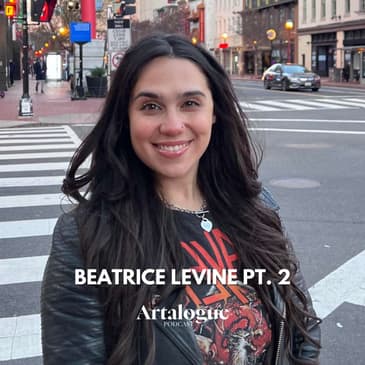
Ever wondered about the dark past of Nazi art looting and its devastating impact on Jewish families? Our conversation with Beatrice Levine, the brilliant mind behind Culture Quota, will take you on a fascinating exploration of World War II art looting and the critical role of provenance in identifying such pieces. From her humble beginnings in an auction house to her current position at the Spencer Museum, Beatrice shares her engaging journey through the art world, emphasizing the importance of grabbing every opportunity to gain a comprehensive understanding of the industry.
As Beatrice guides us through her intriguing transition into working with luxury goods and interior design, we uncover the personal and functional aspects of these domains. The conversation then shifts to the haunting history of art theft during the Second World War, discussing how the resource-starved Germany targeted Jewish families, robbing them of their priceless art collections. Despite the importance of provenance in tracing back these stolen art pieces, countless artworks still remain unclaimed with slow progress in returning them to rightful owners.
The closing segments of our discussion hone in on Beatrice's research aspirations in Nazi-era research and provenance studies. Emphasizing the need to fill gaps in academic discourse, Beatrice also expresses her drive to make art history more accessible by teaching, writing a book, and engaging in speaking events. We explore the delicate balance between pursuing multiple passions and the importance of deriving happiness from what you do. As we celebrate Beatrice's content creation on Culture Quota, we also urge her to consider starting a podcast, tapping into her ability to effortlessly shift between solemn and light-hearted topics. Tune in for an insightful journey through history, art, and personal growth.
Connect with the Artalogue:
Madison Beale, Host
Be a guest on The Artalogue Podcast
Hi everyone, welcome back to part two of this episode with Beatrice Levine. In this part, we'll be talking with Beatrice from Culture Quota about her research in Nazi art looting and provenance. Beatrice, welcome back. Hi, thanks for having me back. What has been your experience working in the art world so far, going from auctions to the Spencer Museum?
Beatrice Levine:Yeah, I've had a pretty varied experience and that's always my advice to people when they come to me on Culture Quota or in my DMs or they email me and they say how do I get involved or how do I start, and I always say be open to anything, because when you get your bachelor's degree, it's really like a survey degree right, you've gotten a very general sense of the canon, which can seem maybe like it's not an advantage, but it is because you can then jump in anywhere to the art world with that knowledge. So one thing I see people doing a lot like a big mistake they make is they're like I want to work in this department, in this museum, or I want to work in auctions in this department, and that's just not how the job market works. Unfortunately, and I think you're doing yourself a disservice. I did not graduate thinking, yeah, I want to work in an auction house. I applied everywhere. I applied to do Co-Check at the MCA in Chicago, I applied to work in the retail store, I applied to the American Writing Museum in Chicago. There was anywhere that would give me a job that was somewhat in the field I was truly a game for, and so the only people that responded and gave me a job was this auction house in the West Loop called Hyman Auctions and I started part-time by answering the phone, which again, I think is a job. A lot of recent grads would say, no way, I deserve full-time pay and I deserve all these benefits, and I totally agree Everyone should be paid a living wage. But if you want to get your foot in the door, sometimes you do have to take the shitty job of answering 200 calls a day, and what that led to was I was onboarded as full-time within a month of that it can happen.
Beatrice Levine:It really is about getting your foot in the door, and I worked in the front and I'm trying to think why did they technically call that department? I think it wasn't visitor services, it was like client services, and so that was basically just answering the phones, dealing with all the incoming correspondence, working with auction bidders on bid day, working with consignors and potential consignors when they came in to have their meetings, and a job like that. You really learn how an auction house works from the top down, like I almost say, if you are going to get into any sort of industry or get into any sector of an industry, right. So a gallery or a museum or an auction house, take the job in the front, take the job that has to basically work with every single department to actually be able to function, because then after a year you are the person that knows everything and you can slide into any other role that becomes available Like your choice. Basically, once your job that you're interested in becomes available, you are more than qualified than if you were just within this really highly specialized position like upfront. So that's, I did that for about 18 months and then I was finally offered an account executive position, which is again a really fancy word for saying like admin, but just admin in a specific department.
Beatrice Levine:And, given my background, I always surprises people. I think they would have thought like fine art or painting or whatever, and probably would have enjoyed that. You get to a point when you're working where it's like, yes, technically I probably would be better suited, my knowledge would probably be better for the fine art department, but in terms of the working relationship I would get along better with the luxury goods team, right, and I had enough knowledge of that just in terms of what I had studied, especially with my thesis, like going into like visuals, like costumes and aesthetics and stuff, and so I ended up transitioning to what they called luxury goods, so that was jewelry and couture, and that's another I think mistake I see people doing is they say I have to work in this one department. The fine art department at Heinemann was like almost all men and they were all pretty young, so they're probably gonna die in those roles or die in that department. So like I could have probably waited like 20, 30 years till they threw me a bone, but I wasn't gonna do that.
Beatrice Levine:So I went in and I learned something new and it was so worth it, especially with jewelry. I had never worked with jewelry but jewelry is basically a science. Specialists in oh my God, it's gemology. The specialists in there. They're trained completely differently than a specialist would be in a fine art department or a furniture and deck department. They have a very technical training and like hard skills, and so that was amazing to watch and see how they function and what their world was like and how it crossed over with this general fine art industry. And I learned a lot doing that.
Beatrice Levine:And then afterwards I left the field and worked in an interior design firm for a while just doing like more client services and project management and that was also interesting to see. I was basically the same clientele, just almost from a different perspective, so I learned more about basically. It was so much more personal than auctions working in interior design because you're working in someone's home Like we mostly did residential and so I felt like I really knew what that experience was like at the auction house, because a lot of times you're dealing with like bereaved families or you are dealing with like divorces or people who are you're going into the home to work with these clients completely different than interior design, when you're literally helping someone pick out like their bed linens and everything is going into it from like materiality to aesthetics to visuals, like it's all the things. So, even though it was always like the arts adjacent, it was very interlinked and it was almost like the actual living functional arts because like maybe being like a clothing designer, right.
Beatrice Levine:It was so much more personal. And then after that was when I decided to go back to school and I was in visitor services at the Spencer and that was the first time I ever worked in a museum and it's different in the sense that it was an academic museum. So it wasn't like working for the Met or something. It had different modes of functionality. Right we are. The Spencer has to answer to the state. It's a state, it's an academic university museum for a state university. So very different museum experience probably than a lot of people. But something still ring true in every workplace in the arts Limited breaks, everything's an emergency, like all of that. Still, there's some common threads among all of those jobs. Even they sound on paper so different. Our industry is very what's the word? Our industry has a lot of similarities across all the different jobs you could have, for better or worse.
Madison Beale:So you're in the process of getting your masters in art looting and provenance research. Can you briefly explain what happened in Rolure 2 with regards to art and the Nazis in Germany?
Beatrice Levine:Yes, and I'll explain what I studied, because there's like all topics, it's like you could go so many different routes. So I study art looting of primarily Jewish community in Europe. So it's a little bit twofold. What happened, essentially? When Germany decides that they're going to the Nazi Party, decides they're going to expand and break all of these Political deals they have with other countries, that they're not going to invade Poland, say sorry, soviet Union. We know we said we wouldn't do it, but we're gonna do it.
Beatrice Levine:Germany has a problem. They had a lot of problems, but they had a problem in the sense that Germany's a really small country. They have a manpower and a resource problem, right? How are you going to take over Poland and Austria and eventually even the Soviet Union, with that limited number of people? There's only so many Germans, right? Even if you took over, like France, austria and Poland all in one fell swoop within a couple months, that's still not enough people, and so they had a huge manpower and resource problem.
Beatrice Levine:So a way that you can get resources, especially if you're a criminal organization that's masquerading as a government, is to rob people, and it's really easy to rob people that are a group of people you already are prejudiced towards and are already persecuting basically on a daily basis. So it was beyond just art, was everything from businesses to insurance policies. They took the billion dollar tax after Kristallnacht right. So when they attacked German synagogues and German businesses, german Jewish businesses, and Basically said, since so much damage was done, you all, either Jewish community, need to pay a billion Rights marks and taxes. So they did everything they could to siphon all these financial resources out of that community. And one of those things was art and a lot of the big collections in Europe and the prominent collectors were Happened to be Jewish and they weren't aware of that. So a really big one is like the Rothschilds family, which I'm sure if anyone is remotely familiar with the arts in Europe, you know that name and they were in France, they were in Poland, they were in Austria. So that's a lot of collections to loot and a lot of money to be had.
Beatrice Levine:The other side of this, too, is that because Hitler was so involved in the arts himself and fancied himself an artist, he was really a failed artist and thought he had such a wonderful taste and the arts and culture was like the echelon or denoted. You know, denotes that someone being cultured or wealthy Intellectual. It became currency among the NSDAP. So you had people like Gering finding where pieces were especially they were owned by Jewish families and basically making like a hit list of I want these things and they're in these locations and Using them as gifts, gifting them to the furor or having them in his home to basically show off. Right, say, I am more cultured or I am more well-rounded, I'm more in with this like elite that the furor is also a part of and wants us all to be a part of.
Beatrice Levine:So it's too pronged in that sense, one. It's what is a genocide. Your need, they need money, they need resources. Also, uniquely, very oddly, and then as DDP, there's a culture of fine art and intellectualism. That's happening as well. They also want to engage in. And how great to get it for free when you can just go in and take it from someone or have it go through auction and you can pay a fire sale price for it. Right, because it's we're so little now, yeah, so that's essentially what happened and, like I said, jewish families were targeted and a lot of the big collections were owned by Jewish families or the big galleries France, the biggest, you in France was a lot of the galleries were Jewish owned, so you have them taking out entire galleries of art, years and years of Collecting, and so that is what I study is the looting of the Jewish community specifically but other communities, of course, were also subject to this kind of persecution and looting as well and for our listeners.
Madison Beale:Can you tell us what provenance is and why it's?
Beatrice Levine:important. Yes, it's always one of my favorite things to talk about because I would say it sounds so not sexy, like it sounds not fun at all. It's provenance is just a really fun, stuffy, academic way of saying the history of the location of an item over time. But that becomes really important when you're trying to find something that's missing Absolutely. Or you're right or you're worried you might have something that you didn't know was stolen in your collection. You know, I don't want to say everyone has looted R. Everyone who has ever had looted R is an evil person and did it on purpose, we know.
Beatrice Levine:But when you're trying to figure out whether you have an item that's looted, the provenance, so the history of where that item has been since its existence and how it passed through these hands at what time, is really important.
Beatrice Levine:So there are like red flag dates or if you're looking through your like the his provenance is driven item, other red flags, right, say, we have like a bill of sale and then another bill of sale and then we don't have any information but it ends up in this museum in five years. Wait a minute, what happened in that five years? So the provenance researcher, their job is to investigate that gap and make sure that the way it got from point C to D is actually legitimate and that's dependent. It's so dependent on, like, the piece and the information that's out there and the artist and the family and the museum and their record QB at the time. So it's never, oh yeah, provenance researcher is just like a witch and can find this information like. The information has to exist, it has to not be lost to time. But that's their job is to go in and try to fill that gap as best they can.
Madison Beale:Okay, so where are we now with regards to the state of the looted art? How much has been returned? Where does it go? What's the process?
Beatrice Levine:We're not. We're not in a good spot, I think, and I don't think we ever will be, in a sense. But it's interesting. There is a false idea that, like we are in a good spot and enough time has passed since the war that this kind of research area is not needed anymore. I've even had other graduate students, unfortunately at KU, and I tell them what I said. They say, oh, we still have to. We're still doing that and, yes, I think that the Holocaust in World War II is not the only instance where this took place. We always tell my students when they're interested, pick a war, pick a like Ukraine.
Beatrice Levine:What's happening in cultural heritage in Ukraine now provenance researchers will for sure be working on in the next 20 to 30 years. So there's always going to be, there's always going to be a need for it and we're never done with what's happened in the past, right. So in terms of what I studied, like the Jewish community, certainly we're not close to done. A lot of things have been returned. The bigger issue now I would say is like the monuments men and women foundation, which is still up and running. I think a lot of people think the monuments men or they were done. They really wrapped things up in 1948 and they were like we're good, they're still foundation, it's still very active and they do a lot of proactive research.
Beatrice Levine:And a big issue now that they've come across is museums or collections or different collections, or collectors having these items, maybe not knowing they were looted. Because, again, museums all have a boiler plate sort of section of their website that says we really take Nazi or art leading seriously and we do everything we can and they don't. And a lot of that comes down to funding gift to hire provenance researchers and why would that be a priority if there's no consequence? Right, there's no law that's looking at. No one's going to go to prison because they have a looted piece of art from a Jewish family. That would be way too harsh of a consequence, right. So the issue now really is collections having these looted pieces, it being brought to their attention by problem and on researchers and this is why you should see happen at the auction house all the time and you can watch. You can read tons of articles about how Heinemann handle antiquities where probably not researchers come to them say, hey, this has bad problem. It's like your problem, doesn't that correct? This thing was actually stolen or is from this country and you need to restitute and or go, at least try the process start and they just ignore it because there is no consequence.
Beatrice Levine:There's something called the Washington principles in the United States, but they're which basically just says oh, if I find out that something's looted and I'm a museum or any other institution that handles this cultural property, I will do everything I can in my power to make sure it goes back or try to find where it's supposed to go. And those are non legal principles, it's like an honor system. So that's like I think, our biggest hang up. I will say it's a little easier in Europe because their museums and collections a lot of times belong to the state or they're run by the state. So if they're caught with something again doesn't necessarily mean they did it on purpose. But if they are approached that they have something as looted, they're much easier to deal with because they have a government to answer to, right or it's really. It's the government itself that's being like, accused of this. So they're much more willing to just go ahead and offer it back to the family or go through the proper channels of restitution.
Beatrice Levine:The other thing is it's like how does that. How does this happen? Second part of the question it is so case by case, country by country, because there is no binding law really anywhere. Germany, I know, has some, but I know Germany also has finders, keepers laws. Sometimes the laws that are instituted are also not very helpful. There's a office in New York called the Holocaust claims office and it's well people in New York and they're funded by New York State and they will help anyone from any country that comes to them. It doesn't have to be fine art, can be an insurance policy that can never, was never paid out, could be a bank account in Switzerland that they've never been a lot of access to, and you don't have to be Jewish. It could be any victim of World War two that has some kind of claim to financial property. Their big thing is just like, basically, negotiate and settle, don't go to court.
Beatrice Levine:And that broke my heart when I heard that it just couldn't believe that these families and these victims are still so unprotected that if they want any resolution it is going to have to be some kind of negotiation. And I just it just blows my mind Like you're getting like so passionate, but it makes me so sick to think okay this family could find because I remember too, there's a class aspect to it right? If you're a family that lost everything in the war, you come to the United States, you've never been able to financially recover, and then you find out the Met has a van Gogh that's worth tens of millions of dollars that belongs to your family, which is happening right now. That could change your family's life financially forever. Right, and you don't have the money right now to hire lawyers, to go to court in New York State and be sucked to dry by legal fees, but the Met does. So your solution is gonna be to settle with them and some compromise, which is crazy when they have something of yours that is stolen and they shouldn't have it, and the solution is a compromise.
Beatrice Levine:Like I couldn't believe it when they were talking about how a lot of times, what happens is the family that owns it especially if it's like a private collector will then put it up for auction. They say, okay, none of us can own it now, so why don't we put it for auction and we'll split the sale with you? Huh, that's a very common solution that has reached and it's again. It's just like when they have something that is so clearly yours and there's research to back it up. There's like completely airtight provenance research to back this up that it isn't just here's your stuff back, sorry. Yeah, like it's unbelievable. The greed, I would say. When I went to the training in Denver the greed was so much more excessive than I even thought imaginable, and I've been doing this for a long time. But yeah, awful.
Madison Beale:Yeah, wow. So what are your plans for the future after you finish all of this research?
Beatrice Levine:So I'm doing my MA right now and I'm hoping to go straight into my PhD afterwards. And I don't yes, I would love to teach. So that's why everyone's like why are you doing all this work? This seems like so much work. It's because I wanna teach. I always talk about I wanna be a Marnie Kessler. I really do love teaching. Like teaching is like my first passion. I found out I love teaching, I love working with students and I love these are my favorite conversations to have. Like I could talk to you all day about this kind of stuff.
Beatrice Levine:I love talking right Like I love talking about our history with our historians and I love talking about people who have no idea about our history Like it's just, it's all great, and so teaching really allows me to do that and I also think it's really important. It's important knowledge and the humanities hopefully aren't going to die in the next 20 to 30 years. Like someone's gotta fight for them, so that'll be me. So I definitely wanna go on to do my PhD. In terms of what my research focus is gonna be, I don't know. A big part of it, too is just when we get into something like this, like Nazi era research or provenance research, is you really wanna go where the research is lacking? So there's still big holes Like Wendy Lauer, who's a great she's to run the fellowship program at the Holocaust Museum in DC and her research is on. Like female nurses Red Cross nurses in the Holocaust that works for the Nazis. She's always talking about how there's huge holes of research, like in Hungary and like Belarus, like these countries, that just don't get enough attention. So it'll probably end up being somewhere where there is like a hole. Right Like you wanna actually add to the academic discourse and you don't wanna do something that someone's done before. You also wanna go where you're needed, if that makes sense. Where do we sorely need this kind of research to be done?
Beatrice Levine:In terms of what I'm going to actually end up writing like a dissertation on, I don't know, but that's coming up very quickly. So check in on that. Two, three years. And then I'd love to teach, of course, but teaching isn't you know, teaching would be the main gig. But like I'd love to write a book. I mean, I'm always doing 35 things at once. I'd love to write a book. I'd love to do speaking engagements, like actually be out there in the world with the art history, as opposed to just sitting behind a desk, being accessible again only via the ivory tower. So I'm open for anything. If anyone would like to hire me for their tours and board to give museum tours for their websites, let me know I'll do anything.
Beatrice Levine:I'm a little bit like Lisa Rinne that way Lisa Rinne is I'll take any job and she ended up making a ton of money doing I think Depends I'll do our history depends, I don't care, just anything to get the word out there, get people interested. She's up Paris Fashion Week right now. Lisa Rinne is up here, no she is.
Madison Beale:She was sitting. I don't know if it was front row, but she was up there.
Beatrice Levine:I'm sure I think it was Louie V that she was at Amelia was walking, I'm sure.
Madison Beale:Yeah, I'm sure Amelia was walking.
Beatrice Levine:Lisa Rinne blocked me on Instagram. I don't know why. I love her. I think I posted something about her that she probably wildly misinterpreted, and she did block me on Instagram that is crazy, I know, and one time I.
Madison Beale:What an honor, though.
Beatrice Levine:I know that's how I feel because everyone does get blocked by her and I think the actual Beverly Hills account posted something one time about her and I responded. It was like you know she blocked me right and they responded and they were like she's crazy, they're like we don't know why. She's nuts. I've never put anything, lisa Rinne, I love you. I have never put anything defamatory or mocking of you on culture quota. It has only been praised and I'm sorry if it was poorly received. I apologize. I love you and Harry Hamlin so much we love Lisa Rinne on this podcast.
Beatrice Levine:Yes, this is Lisa Again, lisa Rinne, an apologist.
Madison Beale:Yeah, lisa Rinne, if you ever want to come on the art alive.
Beatrice Levine:She will do it. I feel like she'll do anything. That's her whole thing. She'll do anything We'll get her on here. I'll have to reach out. We can have Lisa Rinne culture quota like reconciliation episode. Oh my gosh, I'll mediate.
Madison Beale:Oh, my goodness, amazing. Just to wrap up, what advice would you have for someone looking to do what you're doing Because you are a content creator, you're a small business owner, you're a researcher, you're an academic.
Beatrice Levine:You do it all.
Madison Beale:So what advice would you have?
Beatrice Levine:I think I learned really early on and I don't know if people are going to love this advice, but I learned really early on. I was willing to pay the happiness tax. So I was willing to go back to academia and teach and study and research because it's what I love to do. And if that meant that, yeah, I have to penny pinch little and, yeah, I am 30 years old and living a life style very similar to a lot of students, that's okay. But I honestly think you don't get there until you actually go out in the world and figure out a lot of what you don't like. So figuring out what you don't like really helps figure out what you do. So for me, I learned very quickly that I was willing to pay the happiness tax. And if you had asked me at 25, if I was willing to go back to school, I'd say no, I love getting this steady paycheck.
Beatrice Levine:And then, by 27, I was like screw this I'm willing to give up, like the $50 skin serum from Sephora and go back to Regina just to be happy. So do what makes you happy is always good, and if that means you have to sacrifice a little bit, I do think it is always worth it. It makes it so different, your quality of life when you're doing something that you actually like. It does not induce a panic attack in you every morning when you wake up. Wow, what a difference.
Beatrice Levine:The other thing I would say in terms of culture, quota and glamour and honey, like the business, one thing Allison and I have always been really good about, because we do have, like our main gigs she runs a marketing department. I have always had a job and then now I'm going to school full time and teaching part time is we don't put a lot of pressure on ourselves. So, like you certainly could do the thing where you give, like you quit your main job and you're like oh, I guess the side hustle is it now and put yourself in immense pressure. And I think we are fed that grind. Culture works and there's no other way to succeed. But Ally and I have built culture, quota and glamour and honey slow and low. We said always cook slow and low. We just did. We had certain goals. We weren't goal list, but we didn't put a lot of pressure on ourselves. We were glamour and honey culture when we're not our main paychecks. We did not put ourselves in a situation where this became do or die for us financially and also took the fun out of it. So I think that allowed us to still engage in these interests that we had and they were enjoyable and launched them grow slowly or organically.
Beatrice Levine:And so I think that's another thing too is, if you want to start something on the side, don't put so much pressure on yourself that it has to be successful right out the gate. You're not making $100,000 a year doing that. Then it's a failure. No, if make sure you still enjoy it like you want to enjoy this stuff. So make sure you're still going at a pace that is enjoyable and try not to burn yourself out.
Beatrice Levine:Ally and I have always done a really good job of just not putting so much pressure on ourselves to be like successful in the way that people find right, you know, like what society would say is a successful business or a successful account or whatever. We just do what we love. We make sure, obviously, that we're getting something out of it, but, like I said, it's not our main paycheck we take home every day and I think that's a big help. We always joke that we would love that to be the reality, but, again, we're not going to put ourselves in an impossible position to get there. We're going to let it grow organically. So yeah, take it slow. Trust me, your nervous system will thank you.
Madison Beale:Yeah, I think that's such great advice, especially for people in our age group that feel that immense pressure and they're always looking to their peers and compare. I know I do. I'm always comparing myself to other people and saying, like that person.
Beatrice Levine:Oh God, why am I not?
Madison Beale:there.
Beatrice Levine:Yeah, yes, I mean like that to me. I obviously get that a lot, being 29 and turning 30 and saying, oh my God, I'm trying to speak, I'm so scared and feel like I haven't done anything. And they say don't compare yourself to other people. That's just not feasible. Like we're all going to compare ourselves to everyone around us, like they were just humans. It's just natural.
Beatrice Levine:The one thing I will always say, and I always have to remind myself, is we're only seeing something that is constructed and filtered. So we're only seeing those of our generation who are making six years, taking naps on tiktok and going live for six hours while they nap. That is what we're being fed. We're not being fed. The culture quote is yeah, this, she makes a good amount of money doing this and she's nice and stable and it happened over eight years. That's not a fun, sexy story to put out there, so it's not getting attention. But that does exist and I think I said I think there's nothing wrong with that at all. It's like the grind culture thing. I think my generation really pushed that point. 1415, 16 was so grind culture, no, slow down. Get in your feminine energy. Slow and low.
Beatrice Levine:Yeah trust me, and if that doesn't work for you and your grind culture, girly, get it. But it's just, it's not the only way of doing things. So that's how I do just nice and slow, and try to just not put that immense amount of pressure on myself. Or if I am comparing, I just always try to remind myself we're seeing one side of one person's story. Yeah so we're all doing great is the moral of the story.
Madison Beale:You're all doing amazing. Yeah, my mom always says don't compare your insights to someone else's outsides.
Beatrice Levine:That's such a good way to put it Right your mom's very astute yes, she, she is the smartest person I know for sure. Yeah, she sounds very keeled Again. I want to know what mantras she's doing in the morning. What HZB is she listening to it? Nice Beta blockers, yeah oh my. God stop. Your mom is first. Jenner Also works. I also prefer a Benzo, but yes, beta blockers.
Madison Beale:Oh, my goodness. Um so, to wrap up, do you have anything that you want to plug?
Beatrice Levine:Oh my God, anything I want to plug. Obviously you can follow culture quote on Instagram. You can follow it on TikTok. I feel like I'm at the end of hot ones. Thank God you didn't make me eat 10 spicy hot wigs. To plug anything, you can always get culture quote on merchandise. On glamoranthaecom, you can use code art historian for 15% off year round. It's not going to be like first time purchase, only purchase year round. You can use that code. We appreciate it and if you have any questions for me, you can DM me, and I also have a Patreon linked in my bio on Instagram and TikTok as well if you want to support and hopefully a podcast coming soon Madison you've inspired me.
Madison Beale:You have to start a podcast. I can't believe that you don't have one. You are the funniest, most intelligent person. You need to start one. Keep going.
Beatrice Levine:I'm just always so worried. I was talking about my very serious research and now I'm talking about beta blockers. I can go. I'm very Britney, but Rose key coded I can just go way off into left field.
Madison Beale:Yeah, but I just think that it's great. Thanks Sorry, I appreciate that.
Beatrice Levine:I was like you know what I think the internet needs. That, though, that's why Britney broski speaks to us so much Rescue nation.
Madison Beale:I love her. I love her. Oh yeah, I'm harder.
Beatrice Levine:I'm harder for her oligarchy or whatever she's got going on over there. I'm a member, a full cult member.
Madison Beale:Beatrice, thank you so much for coming on the podcast today. It has been such a pleasure to talk to you and it has been so surreal to meet you after following culture quota and just being a big fan number one fan. Thank you so much. Yeah, thank you for coming on the show and, yeah, I really can't emphasize enough how much you should go and follow culture quota on TikTok and Instagram. It is the best. It's the best. Thank you.
Beatrice Levine:Thank you for having me.